
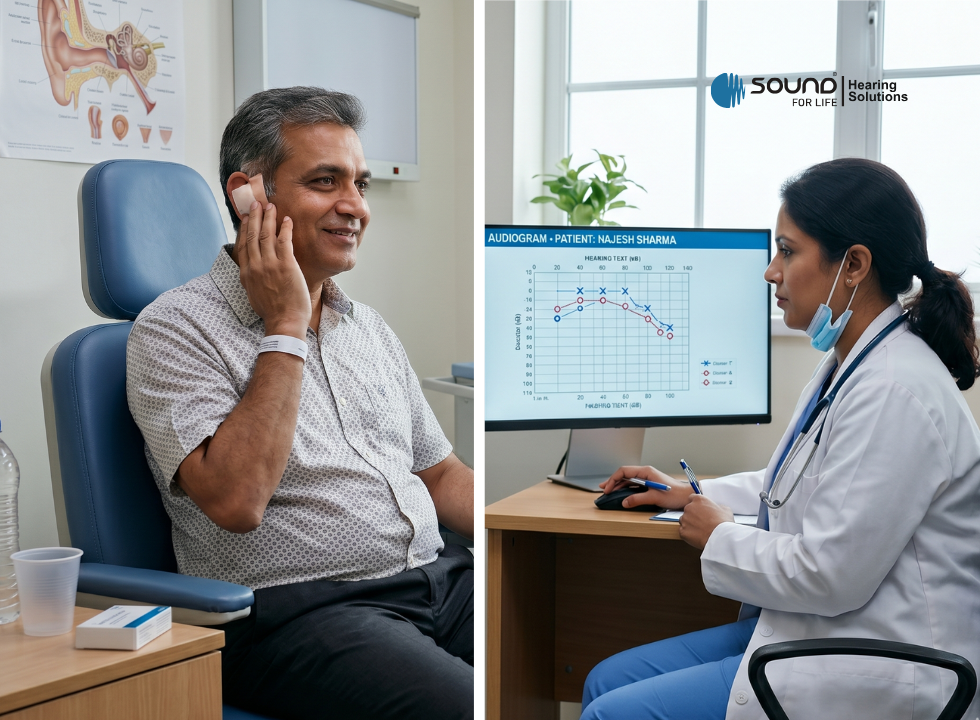

Undergoing ear surgery is a major decision, often made after months, or even years, of struggling with infections, structural issues, or progressive hearing loss. Whether you’ve had a Tympanoplasty (to fix a hole), a Stapedectomy (for bone issues), or a Cochlear Implant, the question on everyone’s mind is the same: “When will I hear normally again, and am I done with hearing aids for good?”
In a country like India, where daily life is filled with vibrant sounds, bustling streets, dust, and changing weather conditions, post-operative care requires special attention. Managing recovery while navigating the heat of a Delhi summer or the humidity of a Mumbai monsoon requires specific attention.
At SFL Hearing Solutions, we believe that surgery is just one aspect of your hearing care journey towards better hearing. True recovery goes beyond the operating room, it involves guided aftercare, consistent monitoring, and the right lifestyle adjustments. Our focus is to support you at every step, ensuring not just healing, but a smooth transition back to clearer, more comfortable hearing and an improved quality of life.
In this article let us break down the journey from the recovery timeline and explore why a hearing aid centre might still be your best friend even after you’ve left the operating theater.
The Reality of Post-Surgery Hearing
It is a common misconception that once the bandages come off, your hearing will instantly be “crystal clear.” In reality, the immediate aftermath of surgery often involves decreased hearing. This is perfectly normal. Your ear canal is likely packed with surgical foam or gauze, and there is internal swelling and fluid that needs to subside.
Think of it like a knee surgery; you don’t run a marathon the day after the cast is removed. Your ear needs time to adjust and get used to hearing again.
The Recovery Timeline: What to Expect
Recovery can be different for every person, depending on the type of surgery and your overall health. However, here is a simple and clear roadmap to help patients in India understand what to expect when visiting an audiologist after surgery:
Week 1: The “Muffled” Phase
During the first seven days, your ear will feel full or “stuffed.” You might hear popping, clicking, or rushing sounds. This is the sound of healing and fluid moving.
Action:
- First few days (Rest and care): Your ear will be sensitive. You may feel mild pain, fullness, or discomfort. It is important to rest and avoid touching or putting pressure on the ear.
- Keep your ear dry and clean: Avoid water entering your ear while bathing. Stay away from dust and pollution as much as possible, especially in crowded or outdoor areas.
Weeks 2 – 4: The Healing Phase
Your surgeon will usually remove the internal packing during this time. You might notice small “bursts” of improved sound. However, your hearing loss might still feel significant because the middle ear is still healing.
Action:
- Continue following ear care tips strictly. Avoid dusty environments common in Indian cities to prevent infection.
- Follow your medicines regularly: Take all prescribed medicines on time to prevent infection and support healing.
- Limit physical activity: Avoid heavy lifting, bending, or sudden head movements for a few weeks, as these can affect healing.
Months 1 – 3: The Stabilization Phase
By now, the swelling has gone down. This is usually when you will return for a follow-up hearing test. Your audiologist will compare these results to your pre-surgery levels to see how much “natural” hearing has been restored.
Action:
- Attend follow-up visits: Regular check-ups with your doctor are very important. They will monitor how well your ear is healing.
- Expect gradual improvement: Hearing may not return immediately. Your ear needs time to adjust, so improvements will happen slowly.
- Watch for warning signs: If you notice pain, swelling, discharge, dizziness, or a sudden drop in hearing, contact your doctor immediately.
6 Months+: The Final Result
The tissues have fully matured. Whatever hearing level you have now is likely your “new normal.”
Action:
- Protect your ear from weather conditions: In India, heat, humidity, and dust can affect recovery. Try to stay in a clean and comfortable environment.
- Be open to further support: In some cases, your audiologist may suggest therapies or hearing aids to improve your hearing quality.
- Stay positive and patient: Recovery is a journey. With proper care and guidance, most people return to a better and more comfortable hearing experience.
Do You Still Need Hearing Aids After Surgery?
This is a very common and important question. The answer depends on what your surgery was meant to achieve.
In simple terms, the result of your surgery will vary based on its goal, whether it was to repair damage, improve hearing, or prevent further problems.
1. When Surgery is for “Safety,” Not “Hearing”
Many ear surgeries in India, such as those for Cholesteatoma (a type of skin cyst), are performed to stop a dangerous infection from reaching the brain. In these cases, hearing improvement is a secondary goal. You will likely still need to visit a hearing aid centre to manage residual hearing loss.
2. When Surgery Partially Restores Hearing
Sometimes, surgery fixes the “mechanical” part of the ear (the eardrum or tiny bones) but cannot fix the “nerve” part of the ear (the inner ear). If you had nerve damage before the surgery, you will still require a hearing aid to process clear sound.
3. The “Binaural” Benefit
Even if surgery restores hearing in one ear, if your other ear is weak, your brain will struggle to localize sound in Indian traffic or crowded markets. Using a hearing aid in the non-operated ear (or both) ensures your brain gets a balanced “stereo” signal.
Navigating Post – Surgery Care in India
India’s environment presents specific challenges for post-surgical patients. Here are some localized ear care tips:
- Pollution & Dust: If you live in a high-pollution zone, wear a clean scarf or head covering when outdoors to prevent dust from entering the ear canal while it is still healing.
- Avoid Self-Cleaning: The Indian habit of using mustard oil or “ear buds” must be completely stopped. This can destroy a surgical graft instantly.
- Hydration & Nutrition: Traditional Indian diets rich in Vitamin C and Zinc can help with tissue healing. Stay hydrated to keep the mucous membranes healthy.
- The “No-Pressure” Rule: India is a land of spices! Try to avoid heavy sneezing fits (often triggered by spice grinding or dust). If you must sneeze, do it with your mouth open to let the pressure escape.
Why a Post-Surgery Hearing Test is Critical
About 6 to 12 weeks after surgery, your audiologist in India will ask you to undergo a comprehensive hearing test. This is not just a formality.
- It measures success: It tells the surgeon if the graft or prosthesis is working.
- It identifies “Dead Zones”: It finds specific frequencies you might still be missing.
- It guides Technology: If you still need help, the test results are used to program modern hearing aids specifically for your “new” ear shape and capability.
Choosing the Right Hearing Aid Centre
If surgery hasn’t fully restored your hearing, don’t be discouraged. The world of audiology has advanced leaps and bounds. Today’s hearing aids are:
- Invisible: Sitting deep in the canal, hidden from view.
- Rechargeable: No more fiddling with tiny batteries.
- Smart: They can filter out the background noise of a busy Indian bazaar while focusing on the person talking to you.
At SFL Hearing Solutions, we focus on helping you after your surgery. We provide post-surgical hearing aid fittings that are carefully adjusted to suit your ear. Our goal is to make sure the device works in harmony with the treatment your surgeon has done, giving you the best possible hearing and comfort.
FAQs: Hearing Recovery & Surgery
Question 1. How long after surgery can I have a hearing test?
Answer: Usually, doctors recommend waiting 6 to 8 weeks for the initial test, with a final assessment at the 6-month mark.
Question 2. Can I wear my old hearing aid after surgery?
Answer: No. Your ear canal shape or the internal structure may have changed. Using an old earmold or device can put pressure on the surgical site. You must have your device recalibrated or replaced.
Question 3. Is it normal to hear “ringing” (tinnitus) after surgery?
Answer: Yes, tinnitus is common during the healing phase. As the swelling goes down and more natural sound enters the ear, the ringing often subsides.
Question 4. Why is my hearing worse right after surgery?
Answer: This is usually due to surgical packing, swelling, and fluid. It is a temporary “conductive” hearing loss that clears as you heal.
Question 5. Can I travel by air after ear surgery?
Answer: Most surgeons advise against flying for 4–6 weeks post-surgery because pressure changes can dislodge grafts or bone prostheses.
The Road to Better Hearing
Surgery is a powerful tool, but it isn’t always a “cure-all.” Whether your surgery was a complete success or you find yourself needing a little extra help from technology, the goal is the same: staying connected to the world and your loved ones.
In India, we value family, conversation, and music. Don’t let the “muffled” sounds of post-surgery life become your permanent reality. Work closely with an expert audiologist in India to navigate your recovery and find the perfect solution for your lifestyle.
Key Takeaways for a Smooth Recovery
- Be patient: Recovery after ear surgery does not happen overnight. It can take weeks or even months to heal properly, so give your body the time it needs.
- Protect your ear: Keep your ear safe from water, dust, and any kind of injury. Follow all the care instructions given by your doctor carefully.
- Follow your surgeon’s advice: Attend all follow-up visits and take your medicines on time. These small steps can make a big difference in your healing.
- Stay alert to changes: If you notice pain, discharge, dizziness, or any change in hearing, inform your doctor without delay.
- Get your hearing test on time: Once your surgeon says it is safe, schedule a hearing test. This will help you understand how well your ear has recovered.
- Be open to hearing aids: If your doctor recommends a hearing aid after surgery, see it as support for a better life. It can improve your hearing, comfort, and daily communication.
- Take care of your overall health: Eat well, stay hydrated, and get enough rest. A healthy body heals better.
- Be consistent with aftercare: Recovery works best when you follow your care routine every day, not just once in a while.
- Ask questions when needed: Do not feel shy about asking your doctor or hearing care expert anything you do not understand.
- Focus on long-term results: Good recovery is not just about healing the ear. It is about getting back to a better quality of life.
Book a free hearing consultation at SFL Hearing Solutions | Call: +91 90 1540 1540
Disclaimer: This article is for educational purposes only. Please consult a qualified audiologist for personalized advice.