
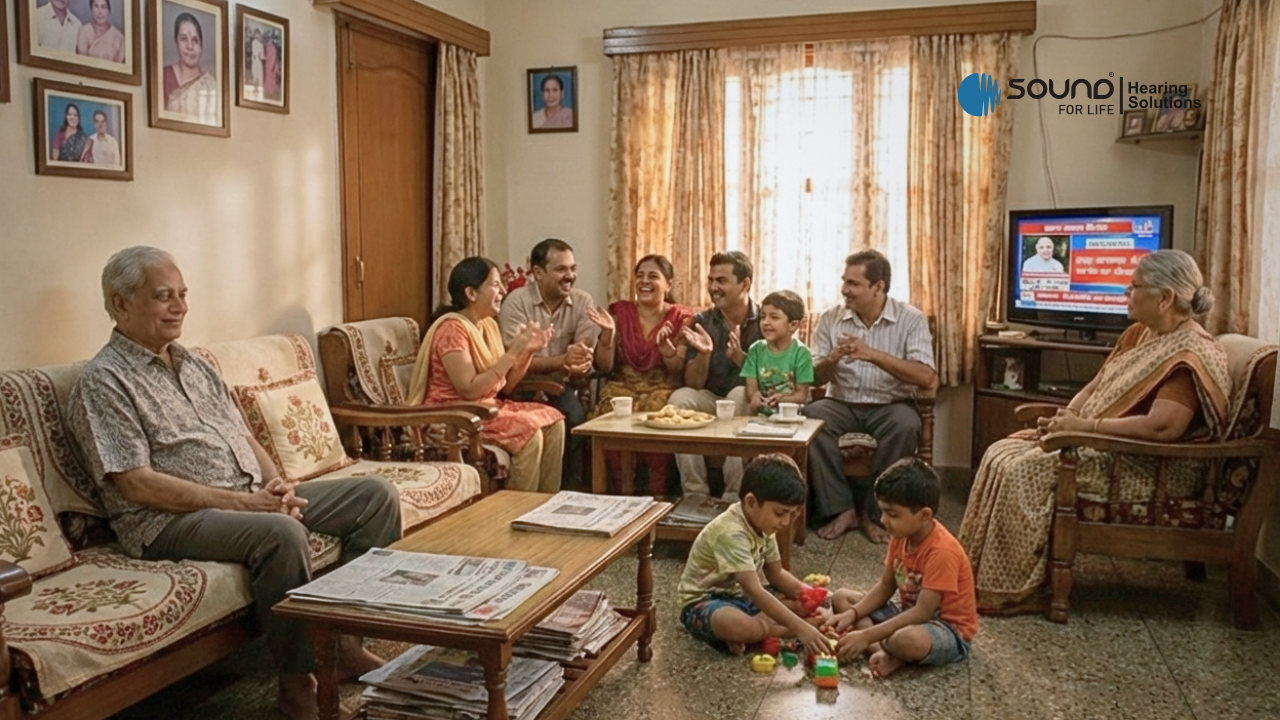

Imagine a normal Indian family on a Sunday afternoon. The family is eating lunch together. Plates are clattering, kids are laughing, and people are having lively conversations over biryani or dal-chawal. The grandfather smiles and nods in the corner. He seems engaged, but if you look closely, his eyes are slightly glazed over. He isn’t really listening; he’s guessing.
Later, the grandmother turns the TV volume up to 40 or 50 to watch her favorite serial, while the rest of the family cringes at the noise. “It’s just old age,” the son says with a sigh. “It happens to everyone.”
This scenario is playing out in millions of homes across Delhi, Mumbai, Kolkata, Chennai, and beyond. It is the face of a silent crisis.
According to alarming estimates, nearly 90% of Indian seniors who need hearing aids do not use them. While we rush our elders to the cardiologist for blood pressure or the ophthalmologist for cataracts, hearing loss is treated with a dangerous mix of neglect, resignation, and stigma.
At SFL Hearing Solutions, we see the heartbreak of this untreated condition every day. But we also witness how happy they are when the stillness is finally broken. In this whole guide, we look at why this crisis is happening in India, the risks of ignoring it, and how you may assist the older people in your life to connect with the world again.
The “Chalta Hai” Attitude: Why We Ignore Hearing Loss
In India, we have a cultural tendency to normalize suffering if it is associated with aging. The “Chalta Hai” (it’s okay/let it be) attitude is the first major barrier to seeking help.
1. The Myth of “Normal Aging”
There is a widespread misconception that losing your hearing is as natural as hair turning grey. While Presbycusis (age-related hearing loss) is common, living with it untreated should not be. We don’t tell someone with failing eyesight to “just squint harder”, we get them glasses. Yet, when an elder asks us to repeat ourselves, we often get irritated rather than concerned.
2. The Visibility Problem
Hearing loss is an invisible disability. Unlike a broken leg or a skin rash, you cannot see it. Family members often mistake a senior’s lack of response for stubbornness, confusion, or even early signs of dementia, rather than realizing they simply cannot hear the high-frequency consonants in speech.
3. Lack of Awareness
Many Indians simply do not know that a hearing test should be part of an annual health check-up for anyone over the age of 60. There is a lack of knowledge about where to go, is it a hospital? An ENT? Or a specialized clinic? This confusion often leads to inaction.
The Stigma: “Log Kya Kahenge?” (What Will People Say?)
Perhaps the biggest hurdle in India is the heavy stigma attached to hearing aids. This is an actual psychological barrier that prevents millions from walking into a hearing aid centre or any hearing related facilities that are even near them.
- The “Disability” Label: In the Indian societal context, wearing a hearing aid is often wrongly equated with being “disabled” or “mentally slow.” Seniors fear that wearing a device will make them look weak or pitiable to their neighbors and relatives.
- The Vanity Factor: Many seniors are self-conscious. They worry that a “beige banana” behind their ear will ruin their appearance. They don’t realize that modern technology has made hearing aids virtually invisible.
- The Comparison to Glasses: It’s odd that people think glasses make someone look smart or fashionable, while hearing aids are often seen as a sign of aging or are unfairly judged. But we need to change this narrative: hearing aids are simply “glasses for your ears.”
The Heavy Price of Silence: Health Consequences
Let us find out the answer for the most crucial question.
What happens if hearing loss is left untreated in the elderly?
The answer goes far beyond just missing out on conversations. The consequences of untreated hearing loss are profoundly significant and can severely affect overall health.
1. The Dementia Connection
This is the most frightening connection. Multiple global studies have shown that untreated hearing loss significantly increases the risk of dementia and Alzheimer’s disease.
- Brain Atrophy: When the brain stops getting sound signals from the ears, the auditory processing centers begin to shrink (atrophy) from lack of use.
- Cognitive Overload: The brain has to work overtime just to decode simple sounds and speech. This constant strain drains the mental energy needed for memory and thinking, accelerating cognitive decline.
2. Social Isolation and Depression
Human beings are social creatures. In India, where community and family gatherings are central to life, hearing loss cuts a senior off from their lifeline.
- Withdrawal: When it becomes too exhausting to follow a conversation, seniors stop trying. They stop going to weddings, they avoid the local park, and they withdraw into a shell.
- Depression: This isolation is a leading cause of depression in the elderly. The silence isn’t peaceful; it is lonely.
3. Increased Risk of Falls
Our ears play a huge role in our balance. Seniors with untreated hearing loss are three times more likely to suffer a fall. In India, where sidewalks and roads are often uneven, this is a major safety risk.
The Financial Myth: “It’s Too Expensive”
“Hearing aids are too costly.” We hear this objection constantly. However, when we break it down, the perspective changes.
- Cost vs. Value: A hearing aid is a medical device you wear for 12-16 hours a day, 365 days a year. It connects you to your family, your safety (hearing traffic), and your entertainment. When amortized over 3 to 5 years, the daily cost is often less than a cup of tea.
- The Cost of Inaction: Treating the effects of hearing loss is far more expensive. The expense of treating depression, falls, or full-time care for dementia is far more than the cost of a pair of high-quality hearing aids.
- Range of Options: At SFL Hearing Solutions, we want people to know that there is a wide range of devices available. You don’t always need the most expensive flagship model; a qualified audiologist in India can fit you with a device that suits your budget and lifestyle.
How to Help Your Parents: A Guide for Caregivers
If you are a son, daughter, or grandchild reading this, the responsibility often falls on you to initiate the change. Seniors rarely seek help themselves.
Here is a step-by-step guide to helping them:
1. Observe the Signs
Look for these red flags:
- They keep asking “What?” or “Huh?”
- They have trouble hearing on the telephone.
- They withdraw from social situations they used to enjoy.
- They complain that everyone is “mumbling.”
2. The Conversation (Be Empathetic, Not Accusatory)
Don’t say, “You are deaf, go get checked.”
Instead say this “Dad, I love our family time and you’re such a big part of our conversations every time but I have been noticing lately that you missed a few jokes at dinner tonight. I missed those times with you. Let’s get a quick hearing check so we can bring those moments back. I will accompany you to the clinic.
3. Find the Right Expert
Don’t just buy a cheap amplifier online. These can damage hearing further. You need a qualified audiologist in India.
- Search for a reputable hearing aid centre near me. Look for clinics that offer comprehensive diagnostics, not just sales.
- To get the best results, they should follow proven steps like speech mapping and Real Ear Measurement (REM), which measures exactly how the aid performs in the person’s ear, so the hearing aid is set up correctly for each person. These steps help the hearing aid feel comfortable and make speech easier to understand.
4. The Hearing Test is Painless
Assure your parents that the test is non-invasive. It consists of listening to beeps while seated in a soundproof booth. It is painless, quick, and provides immediate results.
Modern Technology: It’s Not Your Grandpa’s Hearing Aid
One way to convince a reluctant senior is to show them the technology. The bulky, whistling devices of the 1990s are gone.
- Invisibility: Many modern aids sit completely inside the ear canal or are so small behind the ear that they are virtually invisible.
- Connectivity: Hearing aids today are stylish and use digital technology, just like smart wearables. They can stream phone calls, WhatsApp audio, and music directly from a smartphone to the ears.
- Rechargeability: No more fiddling with tiny batteries. Most new devices are rechargeable, just like a mobile phone.
- AI Noise Cancellation: With today’s advanced AI technology, it has become possible to distinguish between speech and background noises (like a running fan, loud screeching vehicles or traffic). This makes conversations clear even in noisy Indian environments.
Essential Ear Care Tips for Seniors
Prevention and maintenance are key. Share these tips with the seniors in your home:
- Manage Diabetes and Hypertension: High blood pressure and high blood sugar can damage the tiny blood vessels in the ear. Keeping these conditions under control is vital for hearing health.
- No Earbuds/Pins: The Indian habit of using safety pins, matchsticks, or cotton buds to clean ears must stop. This pushes wax deeper and risks infection.
- Check Medications: Some medications (ototoxic drugs) can affect hearing. Always ask your doctor if a new medicine has side effects related to the ears.
- Annual Testing: Just like you check your eyes and sugar levels, make a hearing test an annual ritual after the age of 60.
Frequently Asked Questions (FAQs)
Question 1. Can hearing loss be reversed?
Answer: In most cases of sensorineural hearing loss, that often comes with getting older and happens when tiny nerves or hair cells inside the inner ear are damaged and the hearing loss is permanent. Medicines or surgery usually cannot fix it. The good news is that hearing aids can help a lot. They make sounds louder and clearer so people can hear speech, enjoy family talks, and take part in everyday life again.
Question 2. How do I find a good audiologist in India?
Answer: Look for certification (MASLP degree), reviews, and clinic facilities. A good audiologist will spend time understanding your lifestyle, not just your audiogram. SFL Hearing Solutions prides itself on having highly qualified professionals.
Question 3. Will a hearing aid restore my hearing to 100%?
Answer: No device can restore natural hearing perfectly. However, modern aids can significantly improve your ability to understand speech and hear environmental sounds, bringing you very close to normal hearing levels. They don’t “cure” the damaged nerves of the ears, but they amplify sound and improve speech understanding so life feels more normal.
Question 4. My father refuses to go to a hearing aid centre near me. Can I get a home visit?
Answer: Yes! Many reputable clinics, including SFL Hearing Solutions, offer free home visit services where an audiologist visits your home at your own set time and brings the testing equipment to your home. This is often less intimidating for seniors.
Question 5. Why do hearing aids vary so much in price?
Answer: The price depends on the technology level. Basic models amplify sound. Today’s high-end hearing aids can make speech clearer by lowering background sounds, link directly to your phone for calls and music using Bluetooth, reduce wind noise when you’re outside, and automatically switch to the right settings in quiet rooms, noisy restaurants or outdoors. Your audiologist will show you which features matter most for you and help find the best value.
Conclusion: Breaking the Silence
The statistic that 90% of Indian seniors go untreated is not just a number; it represents millions of lost conversations, missed blessings, and lonely evenings. But it doesn’t have to be this way.
We have the latest technology, the expertise, and the ability to change this narrative. Hearing loss is a health issue, not a character flaw. It requires medical attention, not social stigma.
By taking the first step, booking a hearing test, you are not just improving a sense; you are giving a loved one their life back. You are ensuring that the next time the family laughs together at Sunday lunch, your parents or grandparents are laughing with you, not just pretending to.
Let’s bridge the gap. Let’s stop the silent crisis.
Take the First Step Today
Don’t let silence become the norm in your home. If you or a loved one is struggling to hear, professional help is just a phone call away.
Book a free hearing consultation at SFL Hearing Solutions | Call: +91 90 1540 1540
Disclaimer: This article is for educational purposes only. Please consult a qualified audiologist for personalized advice.