

Hearing loss is frequent and affects millions of adults in India. In reality, WHO estimates suggest that around 6.3% of Indians (nearly 63 million individuals) suffer serious hearing impairment. Good hearing is essential for communication and daily living, thus abnormalities should be identified early. If you feel you have hearing problems, a competent audiologist in India can assist.
SFL Hearing Solutions is a pan-India chain of hearing clinics with more than 50 professional audiologists that provide free hearing examinations and consultations. In this article, we explain why hearing tests are important and outline the many tests used to assess adult hearing loss.
Common Signs of Hearing Loss
Hearing loss often comes on gradually, so you or your family may notice subtle signs over time. Watch out for these common symptoms:
- High TV or radio volume. Friends and family may say your TV, radio or phone is turned up too loud
- Trouble in conversations. You might struggle to follow conversations, especially in noisy places or when multiple people talk at once
- Asking for repeats. Frequently asking people to repeat themselves or mumbling can be a clue.
- Missing parts of speech. Voices or sounds that are soft, like those of ladies or infants, may sound muffled.
- Ringing / buzzing in ears. Sometimes hearing loss is accompanied by Tinnitus (ringing or buzzing sounds) in one or both ears.
- Changes in social habits. You eventually start to avoid social gatherings as you might feel uneasiness in crowds because listening is quite tiring for you.
If you notice or feel any of these signs, you should get your hearing examined by professional hearing experts like SFL Hearing Solutions. You should not ignore even small signs as early detection can prevent problems like social isolation or cognitive strain. In fact, even slight hearing loss can make it hard to communicate and think clearly, so don’t disregard small signs.
Why Hearing Tests Are Important
A hearing test is the only way to know for sure what’s going on with your ears. These tests pin down how well you hear and where any problem lies. By measuring your hearing at different pitches and volumes, an audiologist can determine the type and severity of your hearing loss.This is critical because different types of hearing loss need different solutions.
For instance, conductive loss (which is commonly caused by earwax or fluid in the middle ear) can be treated with medicine, whereas sensorineural loss (damage in the inner ear) is normally addressed with hearing aids. It’s also very important for your health to be tested early. Untreated hearing loss in adulthood has been related to stress, loneliness, depression, and even quicker cognitive deterioration.
As SFL notes, a hearing test provides your hearing thresholds and identifies the degree and type of loss so proper corrective measures can be taken. In short, a hearing test is an easy, non-invasive way to protect your hearing and well-being.
Types of Tests Used to Diagnose Hearing Loss in Adults
Audiologists use a variety of tests to evaluate hearing loss in adults. Each test checks a different aspect of your hearing system. The common tests include:
Pure Tone Audiometry (PTA):
Pure tone audiometry is the basic hearing test that forms the core of most hearing exams. During this test, you wear headphones in a quiet booth and listen for beeps or tones at different pitches (frequencies) and volumes.
You indicate when you hear each tone. This tells the audiologist the softest sounds you can hear at each frequency. The results are shown on an audiogram, which shows how well each ear can hear. Why it’s done: PTA tells you how much hearing loss you have. By comparing air conduction (headphones) with bone conduction (vibrations on the skull), it is easier to tell the difference between conductive loss (problems in the outer or middle ear) and sensorineural loss (issues with the inner ear or nerves). In simple terms, it tells how loud sounds need to be for you to hear them. All hearing aid fittings and treatments start with a pure tone test as the foundation.
Speech Audiometry:
Speech audiometry evaluates how well you hear and understand speech, not just tones. There are two parts: one finds the lowest volume at which you can hear speech (speech reception threshold), and the other measures your clarity in understanding words at a comfortable level.
In practice, you’ll wear headphones and either listen to recorded words or have the audiologist speak words aloud. You repeat the words you hear. This test answers: How clearly can I understand spoken words? It’s important because pure-tone tests alone can’t predict your speech comprehension. People with similar pure-tone results can have very different abilities to recognize speech. Speech audiometry helps the audiologist choose the right hearing aid settings (e.g. adjusting for background noise) and set realistic expectations for hearing aid use.
Tympanometry:
Tympanometry checks the health and movement of the eardrum (tympanic membrane) and middle ear. A tiny probe is placed in your ear canal that changes the air pressure while emitting a sound. This test measures how much the eardrum moves in response to these pressure changes. It doesn’t determine how sensitive your hearing is, but it reveals middle-ear problems like fluid behind the eardrum, perforations, or Eustachian tube dysfunction.
When the ears are healthy, the eardrum moves regularly and the tympanogram (graph) exhibits a peak at normal pressure. If the graph is flat (no movement), it might signify that there is fluid or a hole. If the peak comes early, it could mean that the ear pressure is too low. Tympanometry is fast and doesn’t hurt.
It helps you determine if a medical condition, such an ear infection or too much wax, is making your hearing problems worse. If an audiologist or ENT finds problems with the middle ear early on, they can fix them before putting in a hearing aid.
Otoacoustic Emissions (OAE):
The OAE test is a non-invasive check of the inner ear (cochlea). OAE stands for otoacoustic emissions – these are faint sounds that a healthy inner ear naturally emits when it processes sound. During the test, a small soft-tipped probe is placed in your ear. The probe plays a series of clicks or tones and then listens for the cochlea’s response. If your inner hair cells are working properly, they will produce an “echo” that the probe detects. The audiologist checks if these emissions are present. If you have hearing loss due to inner ear damage, the emissions will be absent or reduced. In short, OAE testing measures hair cell (cochlear) function. It’s often used as a quick screening tool (for example, with infants or busy clinics) because it’s objective and doesn’t require you to respond. But in adults too, OAE can catch subtle cochlear problems. It usually takes about 15-30 minutes and is entirely painless, you just sit still while the clicks play.
Auditory Brainstem Response (ABR):
The Auditory Brainstem Response (ABR) test goes beyond the ear and checks the auditory nerve and brainstem pathways. It’s an objective test often used when other tests are not possible (for example, in babies or very difficult cases) or to rule out nerve damage. During ABR, electrodes are placed on your head (forehead and behind the ears). You’ll wear headphones that play clicking sounds. The electrodes pick up the brain’s electrical activity in response to these sounds. The test measures how long it takes for the signals to travel from the ear up the auditory nerve to the brainstem. If the result shows that everything is normal, then the electrical waves will occur at expected times. In case of delays or abnormal wave patterns, it indicates damage in the inner ear or auditory nerve (like an acoustic neuroma). The ABR test requires no effort from you, you simply relax or even nap during the 20–30 minute test. ABR is also used in newborn screening programs to detect congenital hearing loss early.
What to Expect at a Hearing Test Appointment in India
Hearing test appointments in India follow a familiar routine, whether at an SFL Hearing Solutions centre or any audiology clinic:
- Check-in and History. You will probably have to fill out a short questionnaire or speak to the audiologist about your symptoms. They will ask you about your hearing issues, medical and family history, how much noise you are exposed to, and any ear symptoms (pain, discharge, ringing, or feeling of heaviness inside ears etc.). This helps the test go more smoothly.
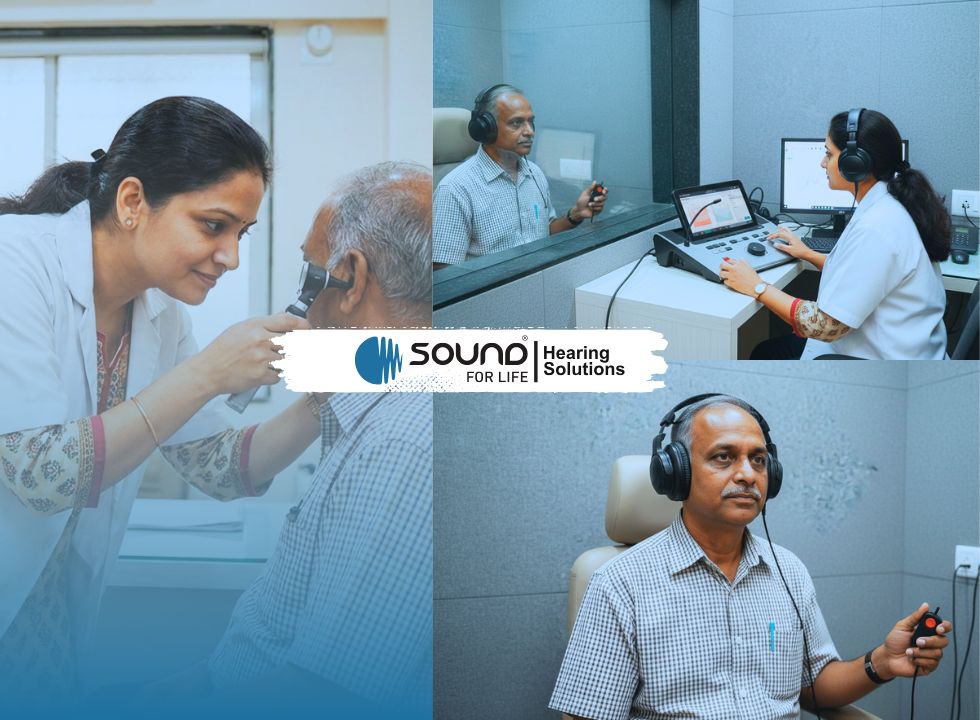
- Otoscopy. With an otoscope, the audiologist will look inside your ears to see if there is wax, an infection, or a problem with the eardrum. That way, we can rule out obvious reasons before we try.
- Hearing tests. Then comes the big review. You will put on headphones and go into a room that blocks out noise. The audiologist will do the tests listed above, which are tympanometry, speech audiometry, and pure tone audiometry (listening for beeps). In some clinics, OAEs or ABR might be done if needed. These tests are painless; you just press a button or raise your hand when you hear sounds.
- Results and Counselling. After testing, the audiologist explains your results. And you will be given an audiogram graph showing your hearing levels. The audiologist will help you understand your test results and discuss whether you have normal hearing, mild loss, or more, and what type of loss it is (conductive vs. sensorineural). They will recommend next steps, this could be medical treatment (for ear infections), a hearing aid trial, or monitoring. In a friendly clinic like SFL, this is also a chance to ask questions. You’ll discuss lifestyle needs (noisy workplace? family conversations?) so the audiologist can suggest tailored solutions.
In India, you usually do not need a doctor’s referral or prescription before a hearing test. Hearing centres and clinics welcome walk-ins or appointments. For example, SFL Hearing Solutions explicitly states that no prior audiogram or doctor’s note is required, their qualified audiologists will do the complete diagnosis. Many clinics even offer a free initial screening or trial. SFL, for instance, offers free hearing screening and consultation with their audiologists. So you can book an appointment (online or by phone) without needing a referral.
How to Find a Trusted Audiologist in India
Finding a skilled audiologist in India is key to reliable diagnosis and treatment. Here are tips to locate a trusted hearing specialist:
- Qualifications. In India, audiologists usually have a Bachelor’s or Master’s in Audiology and Speech-Language Pathology (BASLP/MASLP) from accredited institutes. Look for qualifications or certifications on clinic websites. SFL’s audiologists, for example, are qualified professionals with years of experience.
- Reputation and Reviews. Seek the advice of your friends or your ENT physician to find an experienced audiologist.
- Check online reviews. Established clinics (especially multi-center chains) often maintain good service standards. For instance, SFL Hearing Solutions is India’s largest chain of hearing clinics, with centres from Delhi to Kerala.
- Location and Accessibility. You want a centre that’s convenient. Searching for “hearing aid centre near me” on Google or maps is a good start. National chains typically have many locations. For example, SFL has hearing care centres and support centres in numerous states and cities. Their website lists addresses across Delhi, Mumbai, Lucknow, Bangalore and more.
- Services and Brands. Check if the clinic offers a range of diagnostic tests and a variety of hearing aid brands. SFL partners with major hearing-aid manufacturers (Signia, Phonak, ReSound, etc.), which can give you more options. A centre with modern equipment and multiple brands is often a good sign.
- Home Trials and Support. Some centres, like SFL, provide risk-free trials of hearing aids and strong after-care support (cleaning, adjustments). This means you can test a hearing aid at home before buying. Ask if the audiologist or centre offers follow-up adjustments and support after your hearing test or hearing aid fitting.
In summary, look for certified audiologists (BASLP/MASLP), good patient feedback, comprehensive testing facilities, and supportive services. Established networks like SFL make it easy to find a local audiologist in India, since they have centres in most major cities.
Role of a Hearing Aid Centre and How to Choose the Right One
A hearing aid centre is more than just a shop that sells devices, it’s a hearing care centre. In addition to providing comprehensive diagnostics, expert guidance, hearing aid fitting, and continuing support, a reputable clinic also provides ongoing support.
Here’s what they do and how to pick one:
- Diagnostic and Counseling. Hearing aid centres have audiologists or ENT specialists to conduct tests (as described above) and discuss results with you. They explain what the results mean and present all options. For example, SFL centres offer “one-stop solutions for all hearing problems,” taking utmost care to match your needs.
- Hearing Aid Selection and Fitting. If you need a hearing aid, the centre should provide demonstrations and let you try different models. A reputable centre will be multi-brand (not locked to one company) so you get an unbiased choice. They will program the hearing aid specifically to your audiogram and lifestyle.
- Free Trials and Returns. Many good centres offer free trial periods. SFL promotes a 100% risk-free trial, you only purchase a hearing aid once you are satisfied. This way, you can test wearing an aid at home in real life before committing.
- Aftercare and Support. After you get hearing aids, the centre should provide ongoing care: cleaning and servicing, adjustments, and addressing concerns. SFL, for instance, emphasizes that your relationship begins at purchase, they offer clean/check services and fine-tuning adjustments.
- Brand and Technology. Prominent centres carry top hearing aid brands and the latest technology. This ensures you benefit from modern features (noise cancellation, Bluetooth connectivity, rechargeable batteries, etc.
When choosing a hearing care centre, consider it as you would for any medical services: verify credentials, review testimonials, and evaluate the services offered by each centre. Search for a hearing aid centre in your vicinity and extend your inquiry beyond the initial advertisement, verify whether they specify the presence of qualified audiologists and comprehensive services. SFL Hearing Solutions, for instance, maintains locations across the country and emphasises their team of industry specialists and audiologists. Ultimately, the most reputable hearing aid centre is one that prioritises restoring your hearing ability by conducting comprehensive assessment of your hearing, providing appropriate equipment, and being accessible to you along with subsequent support. Don’t hesitate to call or visit a centre’s showroom; ask questions about trial periods, warranties, and who will be your point of contact.
Ear Care Tips for Adults
Healthy habits can protect your hearing for life. Here are some simple ear care tips:
- Protect from loud noise. Wear earplugs or earmuffs in noisy environments like concerts, construction sites or during fireworks. Even everyday exposures add up, so use noise protection whenever possible.
- Observe the 60/60 rule with headphones. Keep headphone or earbud volume below 60% of maximum and limit use to 60 minutes at a stretch. Use noise-cancelling headphones to block background noise, so you don’t crank up the volume.
- Give your ears quiet breaks. Just as your eyes need rest, your ears do too. If you’ve been in a noisy place (or listening to music) for a while, take a break in a quiet environment. Even 5 minutes of silence can help your ears recover.
- Keep ears dry (prevent infections). Moisture can cause a swimmer’s ear (outer ear infection). After swimming or bathing, dry your ears well with a towel and tilt your head to let water drain. Consider using swimmer’s earplugs if you’re prone to infections.
- Never insert objects into the ear canal. Avoid cotton swabs, fingers, keys or any pointed objects in your ears. These can push wax deeper or scratch delicate skin. Remember: earwax is normal and actually helps protect your ear. If wax buildup bothers you, see a professional rather than trying to clean it yourself.
- Watch out for air pressure changes. During takeoff and landing in airplanes, “pop” your ears by yawning, swallowing or chewing gum to equalize pressure. If you feel pain or muffled hearing after a flight, consult a doctor or audiologist.
- Stay healthy overall. Your inner ear works better when you get enough sleep, drink enough water, and have good blood flow. A balanced diet and regular exercise help blood flow to the ears. Take care of long-term health problems that might affect your hearing, such diabetes or high blood pressure.
- Have your hearing checked regularly. If you don’t have any evident symptoms, you should still get screened every few years, especially after age 50. You can catch and address early alterations.
You can lower your chance of hearing loss that may have been avoided by following these ear care suggestions. If you have any ear discomfort, discharge, or a sudden change in your hearing, get expert care right once.
FAQs about Hearing Loss and Hearing Tests in India
Question : What is a hearing test and why do I need one?
Answer: A hearing test is a series of painless examinations that measure how well you hear different sounds. It’s the only way to know if you have hearing loss, and how severe it is. The test finds your hearing threshold (the softest sounds you can hear) and tells the audiologist what type of hearing loss you have. You need a hearing test so that you can get the right treatment, for example, a properly tuned hearing aid or medical care if needed.
Question: Can anyone perform a hearing test?
Answer: A skilled audiologist or hearing care practitioner should perform hearing tests at a registered hearing care clinic. In India, audiologists typically have specialized degrees and experience. You don’t need to go to a hospital, many private clinics and hearing aid centres (like SFL) provide testing. According to SFL, you don’t even need a doctor’s referral or prescription beforehand, their audiologists can test and diagnose you directly. Just book an appointment or walk into a hearing clinic.
Question: How long does a hearing test take?
Answer: Most visits for hearing tests last between 30 and 60 minutes. It depends on how many tests you take. It normally takes 20 to 30 minutes to do both pure tone audiometry and speech testing. Additional tests like tympanometry or OAEs take only a few minutes each. The audiologist will also spend time discussing your history and explaining the results. Don’t worry, it’s not painful, and it’s one-on-one.
Question: Are hearing tests painful or difficult?
Answer: No, hearing tests are non-invasive and painless. For example, pure-tone audiometry only involves listening for beeps, and tympanometry just changes air pressure in your ear (it may feel a little strange, like airplane ear, but not painful). You won’t have to shout or do anything hard. You just need to sit quietly and respond when you hear sounds.
Question: What if my test shows hearing loss, can it be treated?
Answer: Yes. Many types of adult hearing loss are treatable or manageable. If the hearing loss is due to an ear infection or wax buildup, medicine or cleaning can help. Most age-related or noise-related hearing loss (sensorineural) can be improved a lot with hearing aids or assistive devices. As one FAQ on the SFL site notes, hearing aids don’t cure hearing loss, but for many people they restore enough hearing to improve communication and quality of life. In any case, knowing is better than not getting a diagnosis means you can take action.
Question: How do I find a hearing aid centre or audiologist near me?
Answer: The first step is to look for a hearing aid facility or test in your city online. Look for well-known chains of hearing aid dispensers or ENT clinics. SFL Hearing Solutions, for instance, is a certified clinic and lists locations in major cities across India. You can also ask your family doctor or ENT specialist for a referral. When you contact a centre, inquire if the audiologist has a licensed certificate, offers free consultation, and carries a range of hearing aid brands.
Question: How can I convince my family members to take the hearing test if they have trouble hearing?
Answer: Gently encourage them to get their hearing checked. Explain that a hearing test is not painful but is quick and can greatly improve their daily life if they do have loss. Many adults are hesitant, but modern hearing aids are small and effective. You could offer to book an appointment with a hearing centre together. In India, clinics like SFL often provide free initial hearing screening, so there’s no cost to find out.
Take the first step towards better hearing now.
If you or a loved one are experiencing hearing difficulties, don’t wait. Early diagnosis and intervention make a huge difference.
Contact SFL Hearing Solutions today for expert hearing care in India.
Call +91 90 1540 1540 to schedule a free hearing consultation with our qualified audiologists.
Disclaimer
This article is only meant to give you general knowledge. It should not be substituted for professional medical advice. If you have hearing problems, you should always talk to a trained expert or doctor before starting any treatment. The information here comes from basic understanding and the sources that were used, but it may not apply to all situations.