
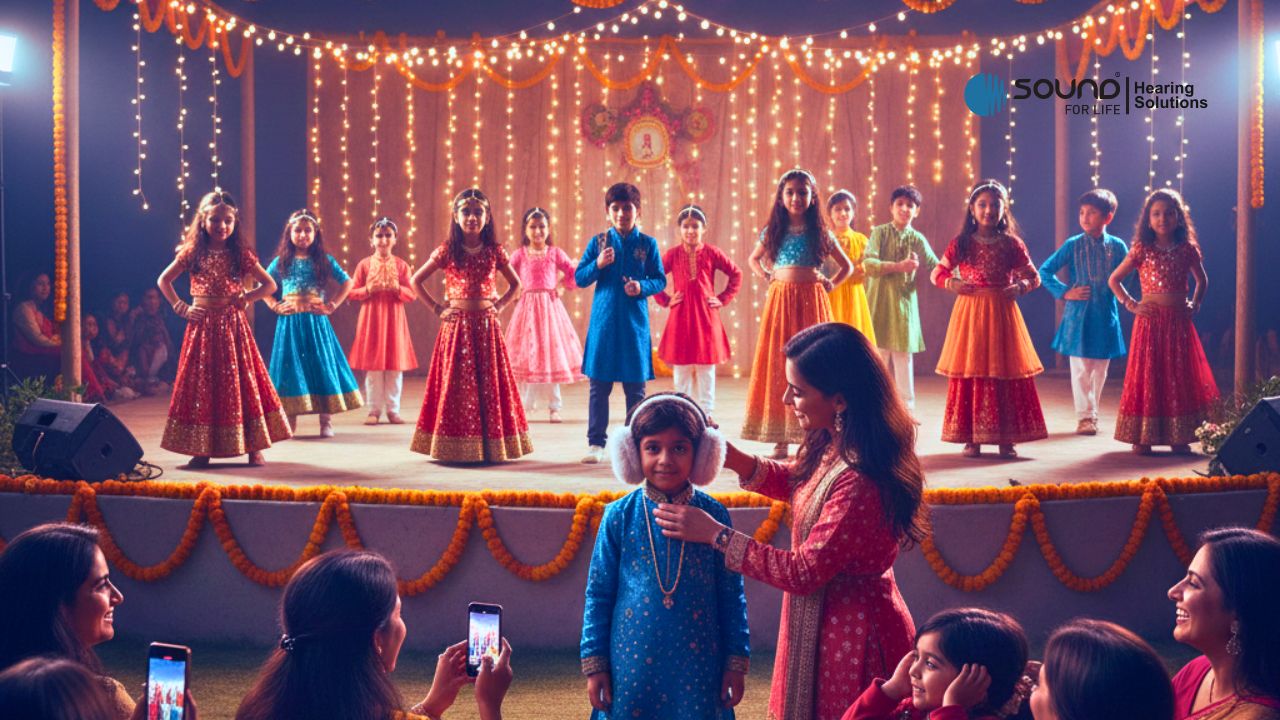

The year-end period in India is magical. It’s when the festive season gives way to school annual days, exciting dance performances, crowded fairs (melas), and long-awaited family trips to the mountains or the seaside. While we meticulously plan outfits, organize travel, and capture every photo, there’s one small, vital part of our children’s health that often gets overlooked: their delicate ears.
Children’s ears are far more sensitive to loud noises and environmental changes than adult ears. The noise levels at a school concert, a bustling railway station, or even continuous use of earphones on a long flight can pose a real risk of damage. And this damage can lead to permanent hearing loss, if ignored.
We, at SFL Hearing Solutions, believe and follow the rule, prevention is always better than cure. This guide is written in a simple way to give Indian parents practical ear care tips and essential information about protecting their child’s hearing. It will explain why seeking a professional hearing test from a qualified audiologist in India and knowing where to find a reliable hearing aid centre near me should be a priority, not an afterthought.
The Hidden Risk: Noise in Indian Year-End Events
The definition of ‘loud’ in India is often higher than global standards. Our environments are rarely quiet, and during the year-end season, the noise levels spike dramatically. Understanding the root from where the risk comes from is the first step toward effective protection.
Noise-Induced Hearing Loss (NIHL)
Inside your inner ear are tiny, fragile hair cells called stereocilia. They convert sound vibrations into the electrical signals the brain uses to understand sound and because these cells don’t grow back, damage from loud noise is permanent.
A single loud, sudden event (like a nearby firecracker burst) or prolonged exposure to moderately loud noise (like two hours of a school concert near the speaker) can damage these cells. This is called Noise-Induced Hearing Loss.
The Decibel Danger Zones During Year-End Activities
| Activity | Typical Decibel Level (dB) | Safe Exposure Time Limit |
| School Annual Day/Concert (Near Speakers) | 95 – 100 dB | Less than 15 minutes |
| A Busy Metro/Railway Platform | 85 – 90 dB | Less than 1 hour |
| Loud Shaadi Music/DJ Night | 100 – 110 dB | Less than 5 minutes |
| Earphones at Max Volume | 105 – 115 dB | Less than 2 minutes |
| Crowded Shopping Mall/Mela | 80 – 85 dB | Up to 8 hours (but stressful) |
Anything over 85 dB poses a risk. Notice that the festive noise levels often cross the 100 dB mark, meaning permanent damage can occur in mere minutes. This is why proper ear care tips are crucial.
Core Concern 1: School Annual Day and Stage Performances
School annual days and cultural concerts are the highlights of a child’s year. But for parents, they present a significant auditory hazard, especially when children are positioned on or near the stage or sound system.
Why School Auditoriums Are Dangerous
- Unregulated Volume: School staff often prioritize sound reaching the back of a large hall, leading to excessive volume near the front or side speakers.
- Monitor Speakers: Children performing on stage are often standing directly next to “monitor speakers,” which point upwards and are intensely loud to help the performers hear themselves.
- Microphone Feedback: Sudden, piercing microphone feedback (a high-pitched shriek) can be acutely painful and cause instant, temporary hearing loss or ringing in the ears (tinnitus).
The Simple Solution: Hearing Protection
The single best ear care tip for these events is protection. You don’t need expensive equipment.
- For Toddlers/Infants (0-3 years): Always use passive noise-cancelling earmuffs. They look like chunky headphones and simply seal the ear from loud noise. This is non-negotiable for baraats or concerts.
- For Older Children (4+ years): Use musician-grade or high-fidelity earplugs. These are not the foam ones that block all sound. They reduce the decibel level evenly so the child can still hear the music and speech clearly, but at a safe volume. This ensures they enjoy the performance without risking hearing loss.
If your child is performing, speak to the teacher beforehand about providing them with a safe distance from the loudest speakers.
Core Concern 2: Managing Ear Health During Outings and Travel
As the year-end travel rush begins, families across India are packing for crowded airports, long train journeys and high-altitude road trips. For children, each of these settings brings its own ear concerns from pressure changes on flights and ear-popping on mountain roads to the constant racket of busy stations, so a little extra care while you travel goes a long way.
1. The Headphone Hazard
During long train rides or flights, it’s common to give a child a tablet with earphones to watch movies. However, many children instinctively turn the volume to maximum, especially to drown out engine noise.
Crucial Ear Care Tips for Earphones:
- The 60/60 Rule: Never allow your child to listen to personal audio devices at more than 60% of the maximum volume for more than 60 minutes at a time.
- Check Their Volume: If you, the parent, can hear the music while they are wearing the earphones, the volume is definitely too high.
- Choose Right Gear: Use over-the-ear headphones instead of earbuds, which sit deep in the canal. Better still, use volume-limiting headphones designed specifically for children.
2. Pressure and Altitude (Barotrauma)
Travel to hill stations like Shimla, Darjeeling, or flights across the country expose the middle ear to rapid pressure changes. The Eustachian tube, which connects the middle ear to the throat, often struggles to equalize this pressure, causing pain and a temporary feeling of fullness. This is known as barotrauma.
Ear Care Tips for Flights/Hills:
- Chewing and Swallowing: Encourage your child to chew gum, suck on a candy (if old enough), or drink through a straw, especially during ascent and descent. Swallowing activates the muscles that open the Eustachian tube.
- Yawning: Encourage exaggerated yawning.
- Don’t Sleep on Descent: Try to keep them awake during the landing phase of a flight, as swallowing mechanisms slow down during sleep.
- Avoid Travel with a Cold: Never fly or travel to high altitudes if the child has a bad cold or ear infection, as the congested Eustachian tube cannot open, leading to severe pain and potential damage.
3. Swimming and Water Safety
If your year-end outing involves a beach trip or hotel pool, remember water can cause outer ear infections (swimmer’s ear), common in tropical climates.
Simple Ear Care Tips for Water:
- Dry Ears Thoroughly: After swimming, tilt the child’s head to each side to allow water to drain out. Use the corner of a soft towel to gently dry the outer ear.
- Avoid Cotton Swabs: Never use a cotton swab to try and absorb water deep inside, as this pushes debris and water in further.
- Use Ear Drops: If your child is prone to ear infections, ask your pediatrician or audiologist in India for preventative acidic ear drops to use immediately after swimming.
Identifying the Signs of Hearing Loss in Indian Children
Early detection is key to treating hearing loss. As Indian parents, we must be vigilant and not dismiss signs a child displays as “the child is being naughty” or “just distracted.”
Subtle Indicators of Potential Hearing Loss
- “Kya?” or “Huh?”: The child frequently asks for words to be repeated, especially when the speaker is in the next room or has their back turned.
- School Struggles: The child performs well in visual or hands-on lessons like art and practical math drills, but they struggle when learning depends on listening language classes, dictation, and taking notes from a teacher’s lecture are where they often fall behind.
- Turning up Volume: They constantly turn the TV or tablet volume up, even when adults find the level comfortable.
- Selective Hearing: They will suddenly notice quiet sounds they care about the jingle of an ice-cream truck or a favorite cartoon theme yet may not answer when you call their name from across the room. It can look like selective ignoring, but often it’s a real struggle to hear and process speech, especially when sounds are far away or there’s background noise.
- Lip Reading or Intense Focus: They focus very closely on the speaker’s face, especially the lips because it helps them understand what is being said. This strong, almost intense focus to lip movements often means they are trying hard to follow the conversation when they are not able to hear the words clearly.
- Articulation Issues: Speech development is delayed, or the child has difficulty pronouncing certain sounds, especially ‘s,’ ‘sh,’ or ‘f.’
If you or anyone you know notices or exhibits any of these signs, do not delay. Not getting early treatment or a hearing test can impact speech development, social skills, hampers academic performance and can even lead to isolation and depression.
The Professional Path: When to Visit an Audiologist in India
If you suspect any issue or if your child has been exposed to extreme noise (like a firecracker accident), the next step is immediate professional assessment.Why You Need an
Audiologist and Not Just an ENT
An ENT (Ear, Nose, and Throat specialist) is a doctor who finds and treats problems with the ears, nose, and throat, such as infections, blockages, or injuries. An audiologist in India is a doctor who specialises in testing, diagnosing, and treating hearing loss and issues with balance that come with it. They know all there is to know about how hearing works and how to test it.
Your audiologist in India will do customised hearing tests for kids that are appropriate for their age, like:
- Visual Reinforcement Audiometry (VRA): This is for toddlers and rewards them for hearing a sound with a visual stimulus, such as a dancing toy.
- Play Audiometry: A game for preschoolers that involves hearing a sound, such as putting a block into a bucket.
- Standard Audiometry: This test is for older kids and is like an adult test in a soundproof booth.
The audiologist in India gives clear, unbiased advice on how to safeguard your hearing, get rehabilitation, or, if necessary, get hearing aids after a complete hearing test.
Finding the Right Support: Hearing Aid Centre Near Me
When searching for a trusted hearing aid centre near me, keep few important factors in mind, especially when you are dealing with children’s hearing health:
- Pediatric Specialization: Ensure the hearing aid centre near me explicitly states they have an audiologist in India experienced in pediatric (child) testing and fitting. Testing a child is very different from testing an adult.
- Advanced Equipment: Especially when a child’s hearing health is involved, they should use modern, calibrated equipment that meets international standards for accurate and comprehensive hearing test results.
- Comprehensive Services: When selecting a hearing centre, opt for one that offers more comprehensive services beyond merely selling hearing devices. A reputable centre will facilitate access to speech therapy if necessary for your child, provide straightforward ear-care guidance for use at home, and conduct routine examinations to maintain and service the device. A reliable hearing centre won’t just hand over a device and send you home. They’ll guide you toward speech therapy if it’s required, show you easy ear-care routines you can follow every day, and call you back for routine cleaning and tune-ups. They’ll also check the fit, update the settings, change small parts like wax guards, and talk you through any doubts you may have.
SFL Hearing Solutions ensures all our clinics are equipped with certified professionals who prioritize early intervention and long-term care for children’s hearing health.
Frequently Asked Questions
Parents often have specific worries about their child’s hearing. Here we have some answers to your concern regarding your child’s hearing issues.
Question 1: Is it normal for a child to experience temporary hearing loss after a loud event?
Answer: It is common, but it is not normal and should be taken seriously. If your child complains of muffled hearing or a ringing/buzzing sound (tinnitus) after a loud concert, that is a sign of acute trauma to the inner ear.This temporary shift is the ear warning you that permanent damage is possible. The cells of the inner ear are under pressure and require time to recuperate. If the symptoms continue for more than 24 hours, it is essential to schedule a professional hearing assessment promptly with an audiologist in India. It is a vital indication that the decibel level exceeded acceptable limits.Implementing protective auditory care measures, such as the use of earplugs, is crucial for upcoming events.
Question 2: What if my child has a severe ear infection or wax blockage? Does that count as hearing loss?
Answer: A wax accumulation or a severe middle ear infection (often associated with colds or water exposure) can result in a transient conductive hearing impairment. This means sound is physically blocked from reaching the inner ear. Although temporary, it nonetheless constitutes a form of hearing impairment and requires prompt intervention by an ENT specialist or paediatrician, followed by a consultation with an audiologist in India to verify that hearing has normalised. Never attempt to extract hardened earwax at home, as this frequently leads to injury. A professional hearing aid centre can safely remove the wax using specialized tools, which is one of the most basic but important ear care tips.
Question 3: My child just failed a school hearing screening. What is the next step?
Answer: A school hearing screening is a very basic test. It is a filter, not a diagnosis. If your child fails the school screening, the next step is mandatory: immediately schedule a full, clinical hearing test with a certified audiologist in India at a reputable hearing aid. Do not panic, but do not delay. The clinical hearing test is comprehensive and will differentiate between a temporary issue (like a cold/wax) and actual long-term hearing loss, ensuring you get the correct treatment plan straight away.
Question 4: Are there specific ear care tips for children who use smartphones or tablets for school or entertainment?
Answer: Yes, the most important ear care tips relate to volume control and duration. For children studying or watching content, always:
1. Use Noise-Cancelling Headphones: These reduce background noise (like city traffic or household chatter), so the child doesn’t feel the need to increase the volume.
2.Set a Physical Limit: Many smartphones or tablets come with a built-in volume adjustable menu in the settings. Parents should activate this feature and keep the volume capped below 60% of the maximum level.
3. Take Breaks: Encourage your child or yourself, even without hearing difficulties, to take a five-minute hearing break after every 45 to 60 minutes of listening. This allows the inner ear an opportunity to recuperate from auditory fatigue, thereby preventing exhaustion that could result in transitory or, in some cases, permanent hearing impairment.
Question 5: If my child is diagnosed with hearing loss, will they need a hearing aid, and will it affect their social life in school?
Answer: If a detailed hearing test confirms permanent hearing loss, a hearing aid or cochlear implant might be recommended by the audiologist in India. Far from hindering their social life, a device improves it! A hearing device ensures the child can fully participate in classroom discussions, hear their friends clearly during play, and develop speech naturally. Modern hearing devices are often discreet (almost invisible) and come in fun colors that your child will love. The biggest obstacle to a child’s social life is unaddressed hearing loss,
which leads to frustration and isolation, and the device that allows them to connect with the world. Early intervention with the help of a trusted hearing aid centre is the best support you can get to help your child.
Protect the Sounds of Childhood
The sounds of childhood laughter, music, the voice of their best friend are irreplaceable. As Indian parents, our priority is giving our children the best start in life. In the excitement of year-end activities, remember that healthy ears are a vital part of healthy development.
Be proactive. Apply these above given simple ear care tips. Stay alert and be aware of small signs that your child’s hearing might be changing, and keep yourself informed about what to watch for.
If you have any doubts, book a full hearing assessment with a qualified audiologist in India, it’s the best way to get clear answers and a plan.
Taking action early means you can enjoy the year-end festivities with family and friends full of laughter, music and togetherness instead of worrying about something that could have been checked.
Book a free hearing consultation at SFL Hearing Solutions | Call: +91 90 1540 1540
Disclaimer: This article is for educational purposes only. Please consult a qualified audiologist for personalized advice.