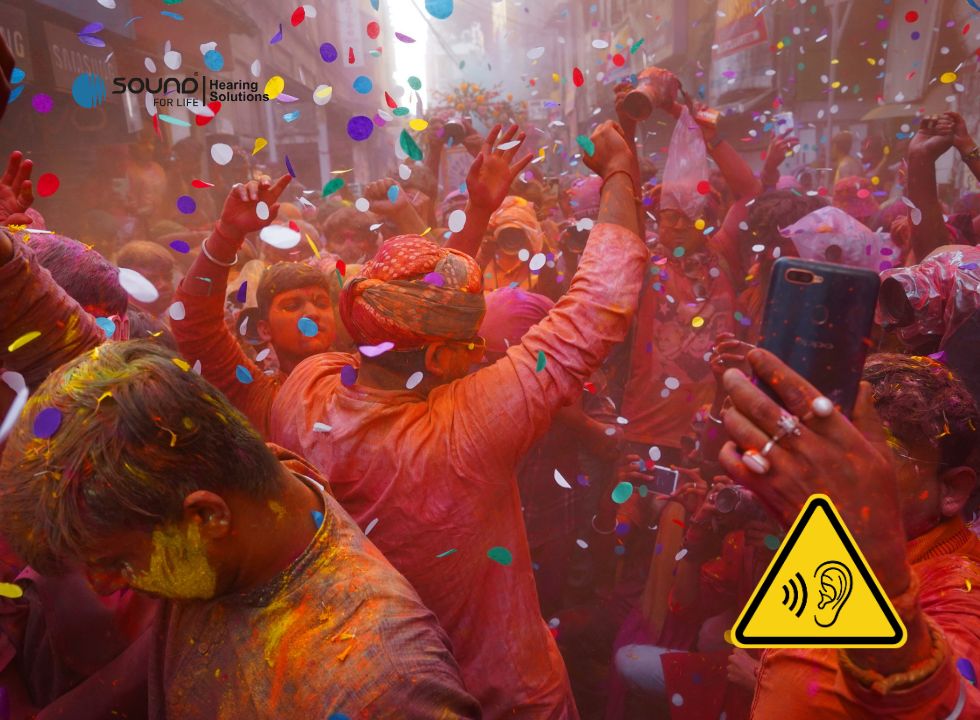

Holi is one of the happiest festivals in India. It is full of colours, laughter, music, water balloons, and family gatherings. Children wait for it all year. Young people enjoy DJ parties. Families along with neighbors and relatives come together to celebrate love and togetherness in this most vibrant and joyous festival of India.
But in all this excitement, we often forget one important thing – our ears.
Every year, many people experience ear problems after Holi. Some face ear infections. Some feel ringing in the ears. Others notice temporary hearing loss because of loud music or or the accidental entry of toxic colors and water into the ear canal, Holi can be a nightmare for your auditory health.
The good news is this: with a little care and awareness, you can enjoy Holi fully and still protect your hearing.
At SFL Hearing Solutions, we believe that celebration should never come at the cost of your health. In this comprehensive guide, we will share essential ear care tips to help you enjoy a safe, colorful, and sound-rich Holi.
In this article we will learn about how to Celebrate Holi safely. Learn simple and practical tips to protect your ears and hearing during Holi in India. Useful for children, adults, seniors, metro cities, and rural areas.
Why Your Ears are at Risk During Holi
Our ears are sensitive organs. Once damaged, hearing may not fully recover. That is why prevention is always better than treatment.
To understand how we can protect our ears, we first need to look at what exactly happens during the festival. Holi in India isn’t just a visual festival; it is a sonic one.
1. The Danger of High Decibels
In most Indian neighborhoods, Holi is synonymous with massive speaker stacks. These systems often pump out music at levels exceeding 100 to 120 decibels (dB). For reference, any sound that is louder than 85 dB can cause irreversible hearing loss if you are exposed to it for a long time. Acoustic trauma can happen when there is a sudden “blast” of music or a firework nearby. This can hurt the sensitive hair cells in your inner ear.
2. Water and “Swimmer’s Ear”
Holi involves a lot of water. Whether it’s a pichkari fight or a rain dance party, water frequently enters the ear canal. If water becomes stuck in the ear and doesn’t drain out properly, the ear stays wet for a long period. As a result, a painful infection called Otitis Externa, commonly known as “Swimmer’s Ear,” can develop.
3. Chemical Irritants in Colors
Modern Holi colours are frequently loaded with chemicals, dangerous metals, and even glass powder. If these particles go inside the ear, they can cause significant discomfort, allergic reactions, or even physical abrasions to the eardrum.
4. Firecrackers in some areas
Firecrackers in some areas during Holi add loud, bright moments to the celebration, but they also bring real concerns. While many people enjoy the sparkle and noise, firecrackers create air and noise pollution, can harm small children, elders, and pets, and sometimes cause accidents. In places with strict rules or health advisories, lighting crackers may even be banned.
A kinder way to celebrate is to follow local laws, choose low-smoke or eco-friendly options, keep a safe distance, and pick set times so neighbours aren’t disturbed. Even better: enjoy music, colourful (safe) water and dry-color play, community events, and sweets—so Holi stays joyful without putting anyone or the environment at risk. Celebrate responsibly.
5. Water balloons hitting the head
A hard smack to the ear or side of the head even from a water balloon that lands against the ear can suddenly change the pressure in the ear and tear (perforate) the eardrum or cause other pressure-related injuries. Such traumatic blows are a known cause of sudden conductive hearing loss and, in some cases, inner-ear (sensorineural) injury.
6. Coloured water entering the ears
Coloured water (especially when mixed with powders, dyes or dirty water) can irritate the ear canal and introduce bacteria or fungi, raising the risk of outer-ear infection (“swimmer’s ear”) which can cause pain, itch and temporary hearing problems.
Practical Ear Care Tips for a Safe Holi
Prevention is always better than cure. Here are several ways you can safeguard your hearing before, during, and after the festival.
Before the Celebrations Begin
- Apply a Protective Barrier: Before you head out, apply a little bit of coconut oil or almond oil around the outer part of your ear (the pinna). This makes it harder for dry colors to stick to the skin and prevents them from migrating into the canal. Note: Never pour oil into the ear canal.
- Invest in High-Quality Earplugs: Forget about using cotton balls; they are porous and don’t block sound effectively. Instead, buy silicone or foam earplugs. They are discreet, effective, and can significantly reduce the impact of loud DJ music.
- Prep the Kids: Children have much more sensitive ears than adults. Make sure they have the right earplugs on when they splash water, and teach them not to aim pichkaris at anyone’s face or ears.
During the Festivities
- Maintain Your Distance: Protect Your Ears from Loud Music. Holi without music feels incomplete. But loud music is one of the biggest reasons for noise-induced hearing loss in India. Inside your ear, tiny hair cells help you hear. Very loud sound can permanently damage these cells. Once damaged, they do not grow back.
- Avoid “Ear-Splashing”: If someone is about to pour a bucket of water over you, try to tilt your head or cover your ears with your hands.
- Be Mindful of Tinnitus: If you start hearing a ringing or buzzing sound in your ears, it is a warning sign from your brain. This is called Tinnitus. If this happens, move to a quiet area immediately.
After the Party Ends
- Dry Your Ears Gently: After your post-Holi shower, use a soft towel to pat the outer ear dry. Tilt your head to each side to let any trapped water drain out naturally.
- Do Not Use Cotton Swabs: It is tempting to use a Q-tip to “clean out” the color. Don’t do it. You risk pushing the chemicals or water deeper against the eardrum.
- Monitor Your Hearing: If your ears feel “full” or if sounds seem muffled the next day, it’s time to consult an audiologist in India.
Identifying the Signs of Hearing Loss
Sometimes, despite our best efforts, damage occurs. How do you know if your Holi celebration has resulted in a problem? Look out for these “Red Flags”:
- Muffled Hearing: Feeling like you are underwater or have “cotton wool” in your ears.
- Persistent Ringing: A buzzing or whistle with a high pitch that won’t go away after a few hours of silence.
- Ear Pain or Discharge: This could be a sign of an infection caused by chemicals or water that isn’t clean.
- Difficulty Following Conversation: If you find yourself asking people to repeat themselves more than usual after the festival, your hearing might have been impacted.
If you experience any of these symptoms, searching for a “hearing aid centre near me” or booking a professional hearing test should be your top priority.
Why You Should Visit an Audiologist in India
In India, many of us do not pay much attention to our ears until the problem becomes serious. Most of the time, we wait until the pain gets worse or the hearing gets worse. But the truth is that getting help early can keep problems from getting worse.
An audiologist is a trained hearing care professional who checks your hearing in a proper and scientific way. At SFL Hearing Solutions, we use state-of-the-art diagnostic tools to assess your auditory health. Whether it is a temporary blockage due to Holi colors or a more serious case of noise-induced hearing loss, our experts provide personalized care and guidance.
SFL Hearing Solutions: Your Partner in Sound
When you search for a “hearing aid centre near me,” you want a place that combines technology with empathy.
SFL Hearing Solutions has established itself as a leader in the industry, offering comprehensive services ranging from diagnostic tests to the fitting of the world’s most advanced hearing aids. Whether your issue is a temporary blockage caused by Holi colours or a more serious condition like noise-induced hearing loss, our team listens to your concerns and offers personalised care. We guide you step by step, so you feel informed, confident, and supported throughout your hearing journey.
Frequently Asked Questions (FAQs)
Question 1. Can loud music during Holi cause permanent hearing loss?
Answer: Yes. Very loud sound for several hours can permanently damage inner ear cells. Prevention is better than cure.
Question 2. What should I do if my ear feels blocked after Holi?
Answer: Lean your head to the side and slowly move your earlobe in different directions to get the water out. A hair dryer on its coolest setting and held at arm’s length can also help get rid of wetness. See an expert if the blockage lasts longer than 24 hours.
Question: 3. Is ringing in the ears after loud music normal?
Answer: Temporary ringing can happen. But if it lasts more than 1–2 days, consult an audiologist in India.
Question: 4. Can Holi colors cause ear infections?
Answer: Yes. Many synthetic colors contain chemicals that can irritate the skin of the ear canal. If these colors mix with water and get trapped, they can cause fungal or bacterial infections.
Question: 5. Should hearing aid users avoid Holi completely?
Answer: No. Just remove hearing aids before playing with water and protect them from moisture.
Question: 6. Are cotton balls effective for blocking noise?
Answer: No. Cotton balls only reduce sound by about 5–10 dB, which is insufficient for loud DJ music. They can also absorb water and chemicals, keeping them in contact with your skin. Use proper earplugs instead.
The Connection Between Ear Care and Overall Well-being
Hearing is one of our primary links to the world. It allows us to communicate with loved ones, enjoy music, and stay aware of our surroundings. Neglecting ear care during high-intensity events like Holi can lead to social isolation and anxiety if hearing issues develop.
At busy events like Holi, our ears can get hurt or blocked if we’re not careful. If hearing starts to go, it can make you feel cut off, lonely, or anxious.
A few simple steps to protect your ears can keep your relationships, confidence, and everyday life feeling normal. Take small precautions now so you don’t have to worry later.
Wishing you bright colours, tasty sweets, and clear, happy sounds this Holi.
Conclusion
Holi is a beautiful reminder of the victory of good over evil and the arrival of spring. As you prepare your white kurtas and stock up on sweets, don’t forget to pack your earplugs and a little bit of caution.
If you or a loved one experiences any discomfort after the festivities, remember that expert help is just a phone call away. Professional guidance from a qualified audiologist in India can make all the difference in preventing long-term damage.
Celebrate responsibly, protect your hearing, and have a Happy Holi!
CTA: Book a free hearing consultation at SFL Hearing Solutions | Call: +91 90 1540 1540
Disclaimer: This article is for educational purposes only. Please consult a qualified audiologist for personalized advice.