
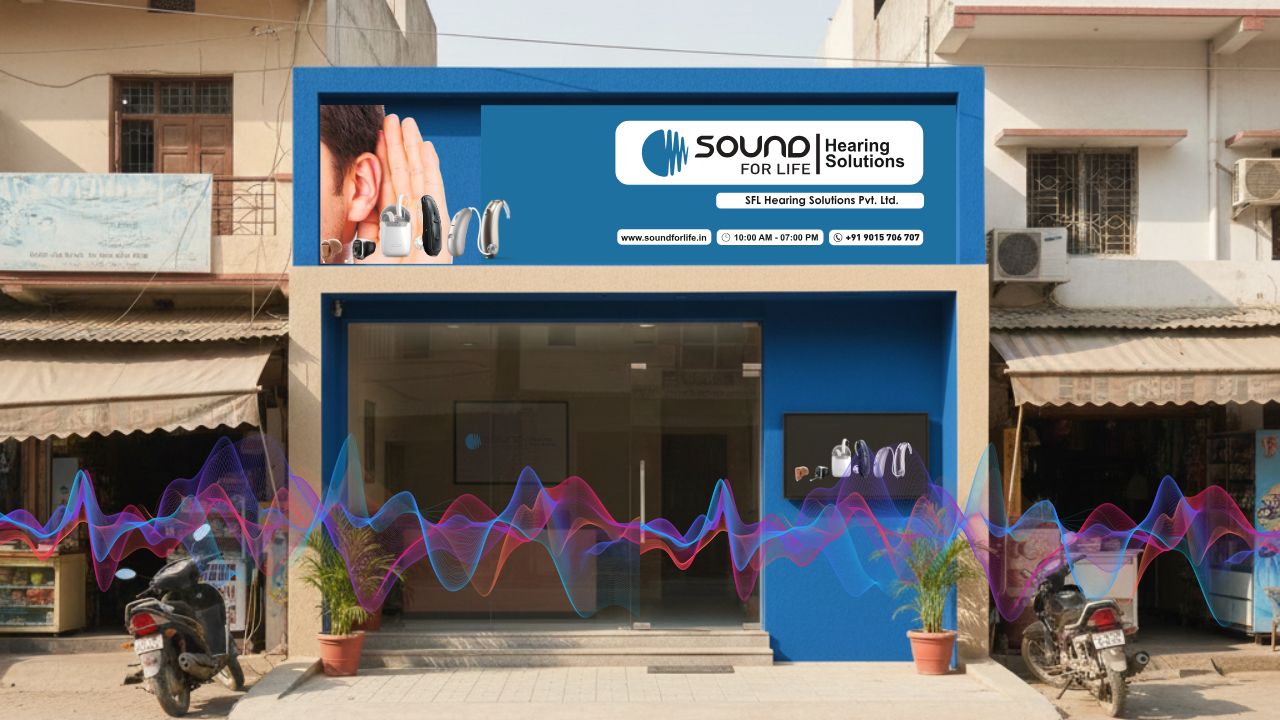

For decades, especially advanced audiology services were mostly accessible to only specialized healthcare and were mostly reserved for inhabitants of major cities such as Delhi, Mumbai, and Bengaluru. However, as we reach late 2025, a hidden revolution is underway in Tier 2 and Tier 3 cities, kasbas, and larger villages across India.
This transformation is being driven by advanced hearing technology devices that are more intelligent, compact, and, most notably, more accessible than ever before. This digital tsunami is profoundly transforming our approach to hearing loss rehabilitation, bringing world-class solutions closer to home.
We at SFL Hearing Solutions believe that a person’s quality of life should never be determined by the place where they live. This comprehensive guide explores the imminent shifts, detailing the new technologies and logistical models that are finally bringing quality hearing healthcare to the heartland of India.
1. The Great Divide: Bridging the Gap in Semi-urban Healthcare
Semi-urban India is defined by rapid growth, robust connectivity, but often a lagging specialized medical infrastructure. In India, it is frequently found that a community may have excellent mobile network coverage and 5G speeds, but it often lacks a permanent, qualified audiologist or a dedicated hearing aid centre close by with the full range of diagnostic tools.
The Audiologist Scarcity Challenge
The primary bottleneck has always been human capital. Training an audiologist in India takes years, and most naturally gravitate towards the established facilities in major metropolitan areas. Because of this, patients in regions like Nashik, Madurai, or Bhubaneswar have to travel hundreds of miles merely to have a specialised hearing test or follow-up programming.
The cost of travel, accommodation, and taking time off work often means that mild to moderate hearing loss goes untreated for years, severely impacting communication, cognitive function, and social connection. The new wave of technology is specifically designed to dismantle these geographical barriers.
From Clinic to Community: The New Model
The late 2025 approach doesn’t just rely on the actual presence of a doctor. Instead, it relies solely on technology to convey the professional’s knowledge to the patient, with the support from local infrastructure. This hybrid approach uses local clinics, pharmacies, and primary health centres as access points for remote services, reducing both cost and travel for the patient.
2. Technological Pillars: The Innovations Arriving in Late 2025
The devices themselves are the driving force of this accessibility revolution. Several key innovations are converging to make professional hearing healthcare a local reality.
A. Tele-Audiology and Remote Programming
For patients who live in semi-urban areas, this is perhaps the most important development. Tele-audiology lets an audiologist in India who works in a big metropolis do important follow-up consultations and make adjustments to hearing aids from a distance.
- How it Works: The patient sits in a local partner clinic (or even at home with a reliable Wi-Fi connection). The hearing aids, via a companion smartphone app, securely connect to the audiologist’s software. The audiologist can then make precise adjustments to volume, sound compression, and environmental settings in real-time.
- The Benefit: This cuts down on 90% of follow-up visits, which were previously a major logistical headache for older adults and their families. This ensures continuous, high-quality care without the burden of travel, making the maintenance of a hearing aid centre near me a digital reality.
B. Self-Fitting and App-Driven Adjustment (Over-the-Counter Models)
While fully professional fitting remains the gold standard, some governments (globally and potentially locally) are approving classes of advanced self-fitting hearing devices. These are designed for consumers with perceived mild to moderate hearing loss.
- Simplified Start: These devices often come with an app-guided hearing test that the user can perform themselves, which sets a baseline prescription.
- Intuitive Control: The user can then use the smartphone app to manage specific environments boosting treble for clarity in a bustling bazaar or reducing background noise during a quiet conversation at home. This shift empowers users and reduces reliance on immediate, in-person professional programming.
C. The Rise of Rechargeable Technology
Battery logistics have always been complicated in non-metro areas. Finding specific sizes of zinc-air batteries (like 10, 312, 13) can be difficult outside of specialized shops.
- The Solution: By late 2025, the vast majority of new digital hearing aid models available in India will be rechargeable. They sit in a small charging case overnight, much like a smartphone or TWS earphones.
- The Benefit: This greatly simplifies the user experience, removes the recurring expense and hassle of replacing small batteries, and increases acceptance especially among older users who struggle to handle them.
D. Advanced Miniaturization and Aesthetics
Today’s technologically advanced hearing aids, such as Receiver-in-Canal (RIC) and Invisible-in-Canal (IIC) models, are easily accessible. They are discrete, comfortable, and exceptionally durable, which is a crucial consideration given the climate and lifestyle in semi-urban environments. This is making devices more appealing to younger individuals dealing with early-onset hearing loss, moving the stigma associated with ‘big ear machines.’
3. The Digital Infrastructure: What Makes This Possible
The huge advancement in technology in devices is only part of the tale. The other half is India’s strong but frequently ignored digital infrastructure, which makes this fast growth possible.
Digital identities and health records that work together
India’s digital stack, which includes Aadhaar, UPI, and the new Ayushman Bharat Digital Mission (ABDM), makes it possible to have secure, portable health records. A patient in a kasba undertaking a remote hearing test can have their results promptly and securely communicated with their remote audiologist in India using their unique Health ID. This continuity of care is paramount.
The Partnership Model: Local Hands, Global Minds
SFL Hearing Solutions and similar providers are focusing on establishing partnerships rather than just large clinics.
- Local Technician Training: Training local healthcare workers or pharmacists in Tier 2/3 cities to handle basic logistics: cleaning, simple battery management, and acting as the secure connection point for a remote consultation.
- Diagnostic Kiosks: Placing specialized, easy-to-use sound booths and audiometric screening devices in smaller, accessible community centres. These devices generate standardized results that the central audiologist in India can rely on for remote diagnosis.
- Local Seva (Service) Points: Converting local distribution points into a hearing aid centre near me for maintenance, repairs, and urgent drop-offs, ensuring quick service turnaround times that match city expectations.
Protecting Your Devices: Ear Care Tips for the New Tech
Even the most advanced technology requires careful maintenance. As these new devices arrive, users in semi-urban areas must adopt advanced ear care tips focused on the new technology.
- Moisture Management: India’s climate, especially during monsoons or sharp temperature changes, means moisture is the enemy of electronics. Always use a dedicated dehumidifying kit or drying box, even for rechargeable units. Never place them near direct heat or sunlight.
- Cleaning Regimen: Modern devices have tiny microphones and receivers. Use the provided tools (tiny brushes, wax guards) daily. Blocked ports due to earwax are the number one reason for device failure and the most common cause of a perceived hearing loss increase.
- App Updates: Treat your hearing aid app like any other critical banking or health app. Regularly update it to incorporate the latest security upgrades and performance enhancements, which are frequently provided by the audiologist in India during remote consultations.
4. Addressing the Stigma and Social Acceptance
Technology also serves as a crucial factor in social acceptance. The smaller, more discreet design of late 2025 hearing aids helps break down the traditional stigma associated with “hearing machines” in older generations. When a device is almost invisible or looks like a modern Bluetooth earbud, younger people with hearing loss are far more willing to embrace rehabilitation early.
This cultural shift, combined with accessible technology, encourages early intervention, which is the most effective defense against the long-term cognitive and social impact of untreated hearing loss. We encourage local community leaders and healthcare workers to promote this positive change in perception.
5. FAQs: Managing Hearing Health in Semi-Urban India in the Future
This comprehensive FAQ addresses essential questions pertaining to the challenges and opportunities presented by the evolving technological landscape in India’s expanding markets.
Question 1. In India, do I still need to see an audiologist even if I am using a self-fitting hearing aid?
Answer: Yes, absolutely. While self-fitting devices provide a good starting point, nothing replaces the expertise of a certified audiologist in India. A self-administered hearing test only measures air conduction, whereas a professional in a proper hearing aid centre near me performs a comprehensive battery of tests (including bone conduction and speech-in-noise testing). The audiologist provides the critical diagnosis, recommends the correct technology for your specific hearing loss profile, and handles any complex programming that is beyond the scope of a basic user app. Think of the app as a simple tuner, and the audiologist as the master engineer.
Question 2. How reliable is a remote hearing test? Will it be as accurate as visiting an SFL centre?
Answer: Remote hearing test technology has advanced significantly. For screening and follow-up monitoring, they are highly reliable. However, the initial, diagnostic hearing test should ideally still be performed in a calibrated sound-treated booth. The new model includes a single, mandatory visit to a central hearing-aid centre (or the nearest Tier 1/2 partner) for comprehensive diagnostics and device fitting. All subsequent adjustments, minor maintenance and performance checks will be carried out via tele-audiology, preserving the same standard of care from our audiologists in India without requiring regular travel.
Question 3. What essential ear care tips are specific to rechargeable hearing aids?
Answer: Because India’s climate can be humid, dusty and quite variable, rechargeable hearing aids need a bit of extra, careful attention to keep them working well.
- Daily Drying: Put your hearing aids in their charging case every night. Many charging cases come with a built-in dehumidifier or moisture-absorbing feature storing device overnight removes sweat and humidity from it and helps prevent corrosion and electrical faults. If your aids get visibly wet, wipe them gently with a soft, dry cloth and let them air for a short time before charging.
- Clean Charging Contacts: Before placing the hearing aids in the case, check that the charging points on both the aids and the case are free from dust, earwax, or moisture. Even a small amount of dirt can interrupt the charging connection. A soft, dry cloth or cleaning brush can be used gently to wipe them clean each day.
- Weekly Wax Guard Change: The simple step like changing the wax guard once a week or following Audiologists recommendation not only extends the life of your device but also keeps your ears healthy and your hearing clear. Regular checks and replacements help keep sound clear, extend the life of the aid, and reduce the chance of needing repairs.
Question 4. I am in a Tier 3 city. If my digital hearing aid needs repair, how fast can I get service without a full-time hearing aid centre near me?
Answer: The new logistical models are designed for speed. Instead of shipping the aid back to a distant metro lab, SFL Hearing Solutions is establishing “Express Service Points” through local partnerships.
- Triage: A local technician performs a basic check and confirms the issue (e.g., receiver blockage vs. circuit failure).
- Quick Swap: In the case of typical issues like receiver failure, the local point may stock basic parts for quick replacement or rapid repair.
- Rapid Dispatch: For complex repairs, devices are immediately sent via specialized, fast logistics channels. By late 2025, turnaround times for semi-urban areas are expected to be nearly identical to those in metro cities (typically 3-5 business days for major repairs).
Question 5. Are the new, advanced hearing aids arriving in semi-urban India affordable? What about government schemes?
Answer: Affordability is a key focus of the new market expansion. While premium aids will always exist, the democratisation of technology has led to a highly competitive market, offering high-quality, mid-range digital hearing aids at significantly more accessible prices.
Furthermore:
- Insurance: Increasing awareness and better insurance coverage (especially government schemes) are making aids more accessible. Always check with your local hearing aid centre near me, partner or the SFL central team for information on eligible schemes.
- Phased Upgrades: The new technology often allows for software upgrades, so they may buy a base model and add capabilities later without having to buy a new device. This is a cost-effective way to deal with progressive hearing loss.
Question 6. Can these new aids help with long-term, severe hearing loss, or are they only for mild cases?
Answer: The new technology helps people with all types of hearing loss. The self-fitting versions are mostly for mild to moderate instances, but all types of devices, including the strong Behind-the-Ear (BTE) ones made for severe to profound hearing loss, now have better core chip processing, noise reduction, and feedback cancellation. An audiologist in India would suggest the best option based on your individual audiogram. This way, even those with severe hearing loss who live in distant places can have the most advanced and powerful equipment available.
Question 7. What are the three main ear care tips I should follow while using high-tech rechargeable devices?
A. To get the most out of your new aids and make them last as long as possible:
- Avoid Water: Never wear the aids in the shower, during a heavy downpour (use an umbrella/cap), or while swimming.
- Wipe it regularly: Wipe down the aids gently with a dry, clean cloth every night before placing them in the charger.
- Regular Wax Check: Wax is the enemy. Perform a daily visual check for wax accumulation and replace wax guards monthly, or as instructed by your audiologist in India. Ignoring this causes may perceived hearing loss and costly repairs.
The future of hearing health in semi-urban India is bright, connected, and localized. By the end of 2025, smart technology and committed professionals will make it possible for people in small towns to have the same level of care and convenience that was only available in big cities.
CTA: Book a free hearing consultation at SFL Hearing Solutions | Call: +91 90 1540 1540
Disclaimer: This article is for educational purposes only. Please consult a qualified audiologist for personalized advice.