
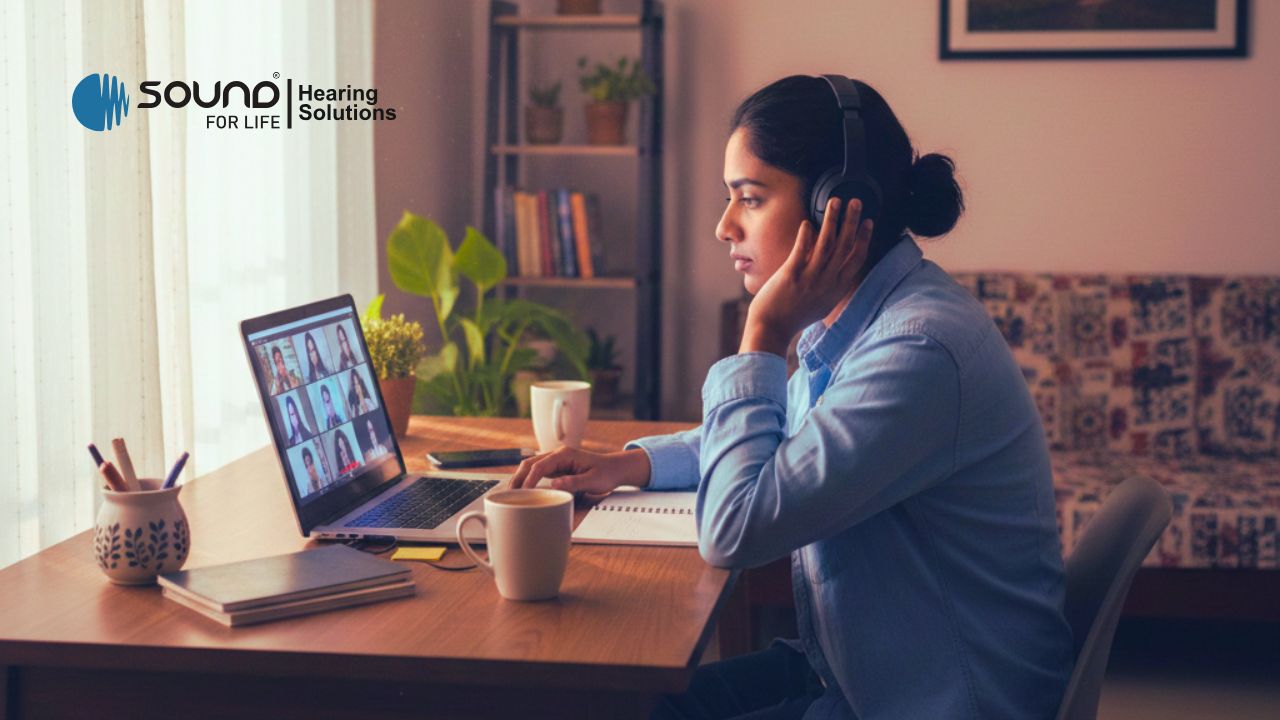

The shift to work-from-home (WFH) has been one of the biggest economic transformations in modern India. From bustling IT hubs in Pune and Hyderabad to remote call centres in smaller cities, millions of professionals are now connected via headsets, screens, and endless digital meetings. This change has offered flexibility, but it has also introduced new and hidden health risks, particularly for our ears.
The human ear is very fragile and only meant to process sound for a brief amount of time. But the contemporary WFH arrangement, which frequently includes 8 to 12 hours of nonstop music going straight into the ear canal, is putting our ears under a lot of stress. This repeated exposure is quietly causing hearing loss, tinnitus (ringing in the ears), and tiredness in the ears among workers.
At SFL Hearing Solutions, we recognize the challenges faced by India’s remote professionals. This detailed guide breaks down exactly how long hours on calls affect your hearing, provides practical ear care tips rooted in the Indian context, and outlines when it’s time to consult a qualified audiologist in India.
1.The Headset Trap: Understanding Cumulative Noise Exposure
We tend to think of hearing loss as something that happens instantly from a loud, sudden noise (like a firecracker). In the WFH environment, the risk is much more subtle: cumulative exposure over time.
The 60/60 Rule and Why We Break It
The universal standard for safe listening, known as the 60/60 Rule, suggests listening at no more than 60% of your device’s maximum volume for no more than 60 minutes at a stretch. In the reality of a nine-hour WFH shift, peppered with urgent client calls, team stand-ups, and training sessions, the 60-minute break rule is rarely followed. Most professionals wear their headsets almost continuously, dramatically increasing their daily noise dose.
The Role of Noise-Cancelling Headphones
While Active Noise Cancelling (ANC) headsets are highly recommended for WFH, they are often misused. Many users turn up the call volume excessively just in case the ANC fails or to compensate for a poor connection. ANC helps filter ambient noise, but it does not protect against the dangerously high volume of the audio piped directly into the ear. Constant high volume causes fatigue and damage to the tiny hair cells (cilia) in the inner ear, which, once damaged, do not regenerate, leading to permanent hearing loss.
Acoustic Shock
A less common but severe risk is Acoustic Shock. This occurs when a sudden, loud, high-pitched noise, such as a microphone feedback squeal, a VoIP connection spike, or a sudden static burst, hits the ear. Even if the sound is momentary, it can trigger temporary or, in severe cases, long-lasting symptoms like ear pain, dizziness, and tinnitus. If you experience this, immediate rest and a check-up are essential.
2.The Acoustic Challenges of the Indian Home
Unlike quiet, sound-treated office cubicles, the average Indian home presents unique acoustic challenges that force WFH workers to crank up their volume. This is a critical factor driving the increase in auditory stress.
The Ambient Cacophony
Consider the typical sounds in an Indian residential area that compete with your headset audio:
- The inevitable, loud traffic and auto-rickshaw honking outside the window.
- The high-pitched siren of the kabadiwala (scrap dealer) or sabziwala (vegetable vendor).
- The pressure cooker whistle at lunchtime, often reaching dangerous decibel levels.
- The inevitable chatter and television noise from shared family living spaces.
To hear a crucial detail in a client meeting over this background noise, the worker instinctively raises the volume above safe levels. This cycle of ambient noise → increased headset volume → auditory damage is a major contributor to WFH-related hearing loss. This makes following consistent ear care tips doubly important.
Effects of Heat and Moisture
When you wear over-the-ear or in-ear headphones for a long time in states like Kerala, Goa, or even during the hot, humid summer months in other parts of India, sweat and moisture can build up around the ear canal. This moisture that gets trapped can irritate the skin and make it easier for bacteria and fungi to grow. If the infections are bad enough, they can impact the ear canal and make hearing less sensitive for a short time.
3. Recognizing the Early Signs of WFH Hearing Strain
Early detection is the key to preventing permanent hearing loss. As an audiologist in India will confirm, the initial symptoms of noise-induced damage are often subtle and mistaken for stress or fatigue.
Tinnitus: The Early Warning System
The first and most common symptom of prolonged digital call usage is tinnitus, a persistent ringing, buzzing, or hissing sound in the ears.It is the ear’s distress signal. You might notice it only when you take off your headphones at the end of the day or when you try to sleep in a quiet room. If tinnitus is persistent, it means the delicate inner ear cells have been stressed.This is a major red flag that warrants a professional hearing test.
Tiredness and Miscommunication in Hearing
Do you feel more tired than usual after a day of calls? Do you often ask your coworkers or relatives to repeat themselves, especially if they have a quiet voice or a high-pitched voice (patli aawaz)?
Auditory fatigue happens when the brain and ears get tired from always trying to fill in the blanks in a conversation. This can happen when there is a lot of background noise or when the call quality is very low. This tiredness can make people retreat from social situations and put a lot of stress on family life.
Muffled Hearing (Temporary Threshold Shift)
After a particularly long or loud call, if sounds feel muffled or dull, you may be experiencing a Temporary Threshold Shift (TTS). This temporary hearing loss usually recovers within hours, but repeated TTS events eventually lead to a permanent shift, where hearing never fully recovers.
4.Essential Ear Care Tips for the WFH Professional
Protecting your hearing requires making conscious adjustments to your work routine and equipment. Here are crucial ear care tips tailored for the digital professional:
Tip 1: Enforce the 20/20/20 Hearing Break
Modify the standard screen break rule. Every 20 minutes, step away from your headset (or turn down the volume), look at something 20 feet away, and give your ears 20 seconds of complete silence. This micro-break allows your auditory nerves to rest and recover, reducing strain dramatically.
Tip 2: Choose the Right Headset (Prioritize Quality over Cost)
Your headset is your primary tool.Invest in one that offers:
- Over-the-Ear Cups: These are generally safer than in-ear earphones (TWS/earbuds) because they position the sound source further from the eardrum and allow for better air circulation, minimizing the risk of infection.
- Built-in Volume Limiter: Look for professional headsets that have hardware-level sound pressure limiters (often capped around 85 dB).
- Noise-Cancelling Mic: Ensure your microphone has noise-cancelling features so you don’t have to shout to be heard over background noise.
Tip 3: Volume Discipline (The Thumb Rule)
Never use more volume than necessary.If you can hear the sound leaking out of your headphones when they are on your head, the volume is too high for safe, long-term use. Use your computer’s volume mixer to keep the primary call sound below 60%.
Tip 4: Schedule “Headset-Free” Time
Whenever possible, transition non-critical, internal team meetings to speakerphone (if privacy allows) or use chat applications. Giving your ears a few hours a day completely free from direct, constant sound input is one of the most effective ear care tips.
Tip 5: Ear Hygiene and Moisture Management
In humid climates, ensure your headset’s ear cups are regularly cleaned with a dry, mild disinfectant wipe. If using in-ear buds, clean the silicon tips daily to prevent wax buildup and reduce the risk of infection exacerbated by sweat and heat.
5.When to Find an Audiologist in India for a Hearing Test
If you are experiencing persistent symptoms, procrastination is dangerous. Noise-induced hearing loss is irreversible, but early intervention (such as fitting protective devices or making lifestyle changes) can prevent further damage.
If you recognize any of the following symptoms, it is time to stop searching for home remedies and book a professional hearing test with a qualified audiologist in India:
- Chronic Tinnitus: The ringing or buzzing does not go away after a quiet weekend.
- Difficulty with High Pitches: You can hear sounds, but cannot distinguish words, especially women’s or children’s voices, which tend to be higher-pitched.
- Muffled Clarity: The world sounds clear in quiet settings, but you struggle significantly in noise (like at a restaurant or a crowded railway station).
- Persistent Pain: Chronic discomfort, pain, or a feeling of blockage in the ears.
A comprehensive hearing test is quick, painless, and non-invasive. It gives the audiologist in India a detailed map of your hearing health, allowing them to provide personalized ear care tips and recommend protective or rehabilitative solutions.
6. Accessing Care: Finding Your Nearest Hearing Aid Centre
Where specialized audiologist and hearing care services were once focused mainly in big cities, SFL Hearing Solutions is now part of a growing network bringing high-quality care to towns and smaller cities across India. If you need a professional hearing test or consultation, locating a reliable facility is easy: check online directories, call local clinics, or ask your ENT for a recommendation to find and book a trusted appointment nearby.
With a quick online search you can locate a certified hearing aid centre near you that is licensed to supply and service the latest digital devices. SFL Hearing Solutions clinics are equipped with advanced diagnostic equipment and staffed by experienced audiology professionals who understand the unique listening needs of people who work from home from quiet, focused settings to video calls and long hours at the computer. We provide a comprehensive, face-to-face evaluation, precise fitting and personalised programming, as well as unambiguous instructions on how to maintain the device and reasonable expectations. Our expert team delivers practical, up-to-date recommendations and ongoing support including follow-up adjustments and remote troubleshooting so your hearing solutions are customized and adjusted to your daily work routine and help you stay productive, comfortable and confidence while hearing clearly
Frequently Asked Questions (FAQs) about WFH Hearing Health
The FAQ section gives clear answers to typical questions that people who work from home in India usually have.
Question 1. Can using a quality Active Noise Cancelling (ANC) headset prevent all noise-induced hearing loss from calls?
Answer. No, an ANC headset is a defensive tool against external noise, but it cannot prevent all noise-induced hearing loss (NIHL). ANC works by cancelling out low-frequency, continuous ambient sounds (like traffic or fan humming). However, it does not regulate the volume of the audio piped into the ear, the actual call volume. If you continuously listen at 80 dB or higher, even with ANC, you are still exposing your inner ear to damaging sound pressure. The best ear care tips involve using ANC to lower the background noise, allowing you to safely reduce your headset volume.
Question 2. I only use the speakerphone on my laptop. Is this safer than wearing a headset?
Answer. Using a speakerphone can be safer because the sound is less concentrated than when delivered directly into the ear canal. However, it presents two new risks in the WFH environment:
- Ambient Volume: If you are in a noisy Indian home environment, you will instinctively raise your speaker volume to overcome the ambient noise. This increases the total noise level in the room, potentially affecting family members.
- Acoustic Quality: Laptop speakers often have poor acoustic quality and compression, forcing you to strain to hear words, which leads to auditory fatigue, even if your hearing loss risk is lower.
Question 3. How can I safely clean wax buildup caused by constant headset use?
Answer. Constant in-ear bud use can push earwax deeper and block the natural outward migration of wax. The most important of all ear care tips is: Never use cotton swabs (Q-tips). They compact the wax against the eardrum, causing impaction and temporary hearing loss. If you feel a blockage or discomfort, consult an audiologist in India or an ENT specialist for professional micro-suction or curette removal. They are the only ones qualified to perform safe ear cleaning.
Question 4. Am I too young to experience hearing loss or need a hearing test in my early 30s?
Answer. Hearing loss can affect people of all ages. But age-related hearing loss (presbycusis) usually starts later, but Noise-Induced Hearing Loss (NIHL) has no age limit. It is directly correlated with sound exposure dose. Someone in their 30s working 10 hours a day on a loud headset for several years can easily have hearing damage equivalent to someone much older. If you have symptoms of tinnitus or struggle to hear patli aawaz (high-pitched sounds), regardless of your age, you must book a comprehensive hearing test.Early diagnosis offers the best chance for intervention and prevention of further damage.
Question 5. What is the worst thing that may happen if I ignore my early WFH hearing symptoms?
Answer. The most serious error is not simply the gradual loss of hearing, but also the effect it has on your brain and mental health. When hearing loss isn’t corrected, the brain has to work hard all the time to make sense of partial sound impulses, which makes it hard to comprehend sound. Studies have found that those who don’t address their hearing loss are more likely to have cognitive decline and dementia later in life.Getting a hearing test early at a hearing aid facility near me will help maintain your brain health and quality of life in the long run.
Question 6. My conversations frequently experience poor quality due to limited bandwidth.Does this have an impact on my hearing?
Answer. Poor call quality, often resulting from excessive audio compression, an unstable internet connection, or unreliable network signals, can place significant strain on your hearing. When the sound is distorted or persistently intermittent, your brain must exert additional effort to fill in the gaps and interpret the other person’s speech.This continual exertion exhausts you mentally, impairs your ability to concentrate, and clearly indicates that you are weary of listening.The inner ear may experience increased pressure if the volume is excessively high or if you are engaged in prolonged phone use.Whenever possible, employ a reliable, high-quality VoIP platform, transition to a landline, or utilise a robust mobile connection for essential communications. These small adjustments can enhance the clarity of your communications, reduce strain on your hearing, and promote all-day comfort.
Question 7: Where can I access a professional hearing assessment? What assessments will the audiologist in India perform?
Answer. It is recommended that you visit a hearing aid facility in your vicinity, such as SFL Hearing Solutions, which is equipped with a soundproof cubicle.
During your assessment, an experienced audiologist in India will conduct tests that may include:
- Otoscopy is the process of examining the ear canal and eardrum.
- Pure Tone Audiometry: An assessment that determines the faintest sound detectable by an individual across various frequencies.
- Speech audiometry is an assessment that evaluates and checks your ability to understand spoken languages. Its assessment is typically performed with ambient noise to simulate the remote work environment.
A thorough, comprehensive evaluation, one that combines a full case history with targeted diagnostic tests gives a clear, reliable picture of the type and degree of any hearing impairment. This precise assessment lets a specialist recommend the right treatment or rehabilitation, from simple behavioural changes to hearing devices or tailored therapy, so you get care that matches your exact needs.
Working from home opens up many career possibilities, but your health should come first. By practising sensible ear care, keeping volumes at comfortable levels, using good-quality headsets, taking regular listening breaks, limiting exposure to loud sounds, and reducing background noise where possible, you protect your hearing every day.
Make an appointment to book your routine hearing check-ups and see a specialist promptly if you notice changes in hearing, ringing, or persistent ear discomfort.
Contact +91 90 1540 1540 to schedule a complimentary hearing consultation at SFL Hearing Solutions.
Disclaimer: This article is for educational purposes only. Please consult a qualified audiologist for personalized advice.