
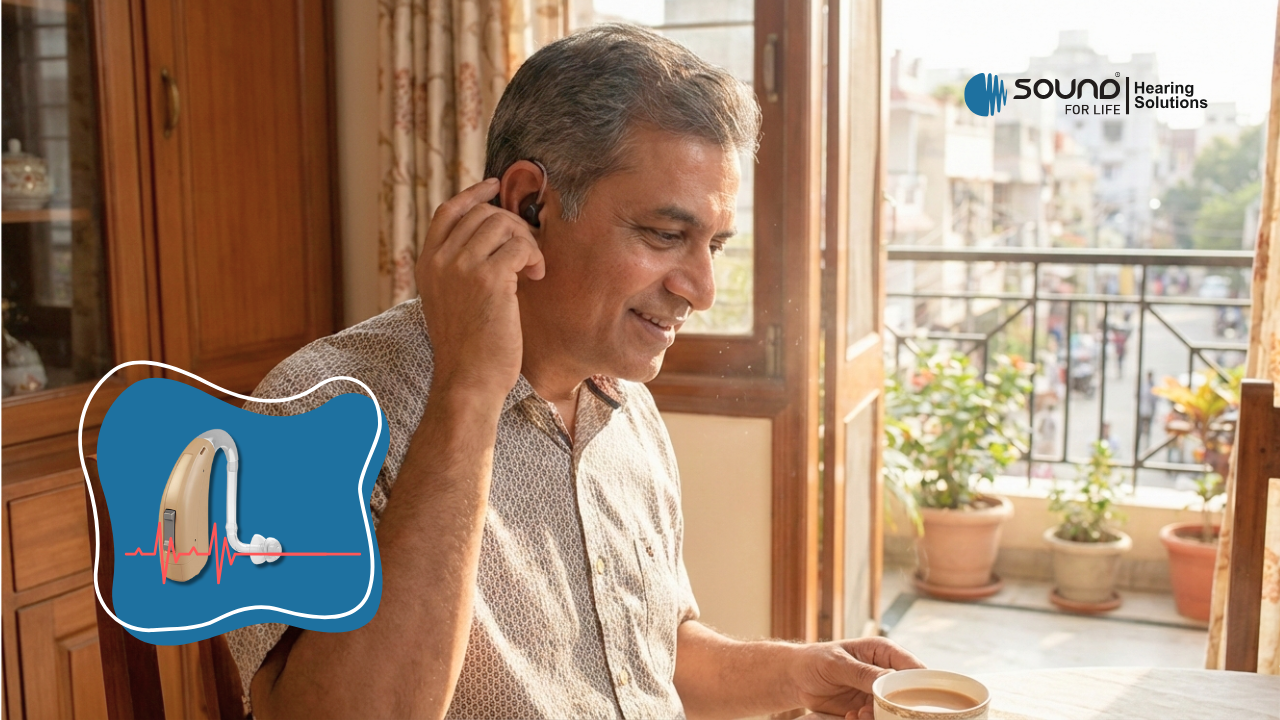

Buying hearing aids is a significant decision. It is an investment, not just of money, but of hope. It is an investment in better conversations with your family, safer experiences on busy Indian streets, and the joy of hearing the little things, like the pressure cooker whistle or the morning birds.
When you invest in a quality device at a hearing aid centre, one of the first questions that likely comes to mind is: How long will this last?
In a country like India, where we value longevity and “value for money,” this is a crucial question. We want our cars, our appliances, and our medical devices to go the distance.
The short answer is: Hearing aids typically last between 3 to 7 years.
However, the real answer is more complex. A hearing aid worn by a farmer in a humid, dusty village might age differently than one worn by a retired IT professional in an air-conditioned apartment in Bangalore.
At SFL Hearing Solutions, we believe in transparency. In this guide, we will break down exactly what determines the lifespan of your hearing aids, how the Indian environment affects them, and the ear care tips you need to maximize your investment.
The “Short Answer” for Busy Readers
If you are looking for a quick summary, here is the breakdown of average lifespans based on style:
- Behind-the-Ear (BTE): 5 to 7 years. (Most durable).
- Receiver-in-Canal (RIC): 4 to 6 years.(Most popular, balances cosmetics and durability).
- In-the-Ear (ITE/CIC/IIC): 3 to 5 years. (Smallest, but exposed to more moisture and wax).
Note: These are averages. With excellent care, some devices last longer; with neglect, they may fail sooner.
Why Do Hearing Aids Have an Expiration Date?
- Unlike a pair of glasses, which can last for decades if you don’t break the frame, hearing aids are sophisticated mini-computers. They contain microphones, amplifiers, receivers (speakers), and computer chips, all packed into a tiny plastic shell.
- They are worn on the body, 12 to 16 hours a day, in one of the most hostile environments for electronics: the human ear.
- Your ear canal is warm, dark, and humid.It produces wax (which is acidic) and moisture. Over time, these elements degrade the internal components. The plastic casing can become brittle, the microphones can get clogged with microscopic dust, and the receiver can weaken from constant vibration.
- Eventually, the cost to repair the device becomes higher than the value of the aid, or the technology becomes so outdated that it can no longer support your hearing needs.
The “Indian Context”: What Affects Longevity in India?
While the global average for hearing aid life is about 5 years, Indian users face a unique set of challenges that can shorten this lifespan if one isn’t careful. Any experienced audiologist in India will tell you that our environment plays a massive role.
1. The Humidity and Monsoon Factor
India is a tropical country. Whether you live in the coastal humidity of Mumbai and Chennai or endure the monsoon season in Delhi, moisture is the number one enemy of hearing aids.
- The Problem: Humidity causes condensation inside the hearing aid. This can corrode the battery contacts and short-circuit the microphone.
- The Impact: Without proper drying, a hearing aid in a humid Indian city may fail faster than one in a dry, cold climate.
2. Dust and Pollution
Our cities are vibrant and busy, but they are also dusty.
- The Problem: Microscopic dust particles and pollution can enter the microphone ports.
- The Impact: This doesn’t usually “kill” the aid, but it dulls the sound quality. You might feel the volume is low even when it is maxed out.
3. Sweat and Heat
Indian summers are intense.We sweat, and that sweat runs down our hair and behind our ears.
- The Problem: Sweat contains salts and oils that are highly corrosive to electronics.
- The Impact: This is particularly tough on RIC (Receiver-in-Canal) aids and BTEs.
4. Earwax Physiology
Populations in different regions have different earwax consistencies.
- The Problem: Many Indians have “wet” or sticky earwax.
- The Impact: This wax can clog the tiny wax guards in the receiver faster, putting strain on the speaker component.
How to Make Your Hearing Aids Last Longer
Just because the environment is tough does not mean that your hearing aids are compromised. By implementing appropriate ear care strategies and maintenance practices, you may substantially prolong the lifespan of your equipment.
1. The Daily “Wipe Down”
Every night, when you take your hearing aids out, wipe them with a soft, dry cloth or a microfiber cloth.Do not use water, alcohol, or cleaning solvents. This removes the day’s layer of sweat and oil.
2. Invest in a Dehumidifier (The “Drying Box”)
This is non-negotiable for Indian users.
- Silica Gel Kits: These are simple jars with drying beads.You place your aids inside overnight. When the beads change color (usually from orange to white), you replace them.
- Electronic Dryers: These are UV-light boxes that sanitize and dry the aids using gentle heat.
- Tip: Ask SFL Hearing Solutions about the best drying kit for your specific model.
3. Change Wax Guards Regularly
If you use an RIC or ITE model, you have a tiny white filter called a wax guard. If this gets clogged, the sound stops. Changing this regularly prevents wax from migrating deeper into the receiver, where it can cause permanent damage.
4. Battery Care
- Zinc-Air Batteries: If you use disposable batteries, open the battery door at night to disconnect the circuit and let air circulate.
- Rechargeable: Lithium-ion batteries generally last the life of the hearing aid (4-5 years) but should not be left in extreme heat (like a car dashboard in summer).
5. Regular Service Visits
Treat your hearing aids like your car. Visit a hearing aid centre near me every 4 to 6 months for a “deep clean.” Professional vacuuming and servicing can remove debris that you cannot reach at home.
Repair vs. Replace: When is it Time?
You might be thinking, “My hearing aids are 6 years old, but they still turn on. Why should I replace them? This is a valid question. However, “turning on” and “helping you hear” are two different things.
Here are the signs that it is time to retire your old devices and look for an upgrade.
1. Your Hearing Has Changed
Hearing loss is rarely static; it is progressive. A device you bought 5 years ago was programmed for your hearing then. If your hearing has dropped significantly, the old amplifier might not have enough power to reach your new threshold without feedback (whistling). A fresh hearing test will reveal if you have “outgrown” your current aids.
2. The Repair Cost is Too High
The “50% Rule”: If the cost to repair your hearing aid is more than 50% of the cost of a new one, it is usually better to buy new. Old electronics tend to have cascading failures. You fix the microphone today, and the receiver fails next month.
3. Spare Parts are Obsolete
Hearing aid manufacturers typically support models with spare parts for about 5 years after the model is discontinued. Once parts are no longer made, a simple breakdown renders the device useless.
4. Lifestyle Changes
Did you retire? Did you start a new job? Did you move into a joint family with active grandchildren? If your lifestyle has become more socially complex, older technology might struggle to filter out background noise, leaving you frustrated.
The Technology Gap: Why Newer is Often Better
One of the biggest reasons people upgrade before their hearing aids “die” is technology. The leap in hearing tech over the last 5 years has been massive.
- Connectivity: Modern aids connect directly to Android and iPhones. You can stream phone calls, WhatsApp audio, and YouTube directly to your ears.
- Rechargeability: No more fiddling with tiny button batteries. Most new aids charge like a mobile phone.
- AI and Noise Cancellation: Old aids simply made everything louder. New aids use Artificial Intelligence to identify and suppress background noise (like traffic or a ceiling fan) while enhancing speech.
If you are struggling to hear noise with your 6-year-old aids, the device isn’t necessarily broken, it’s just outdated.
Frequently Asked Questions (FAQs)
Here are the most common questions we receive at SFL Hearing Solutions regarding device longevity.
Question 1: Do expensive hearing aids last longer than cheaper ones?
Answer: Not necessarily. The price usually reflects the technology level (how well it processes sound), not the build quality.A premium hearing aid and a basic hearing aid usually share the same plastic casing and waterproofing rating. Longevity depends more on maintenance than price.
Question 2: Can I wear my hearing aids in the shower?
Answer: No! While many modern aids have an IP68 rating (water resistant), they are not waterproof. Showering, swimming, or heavy rain can destroy them. If you get caught in the rain, dry them immediately.
Question 3: How often should I get a hearing test?
Answer: We recommend a hearing test once a year. This ensures your hearing aids are adjusted to your current hearing levels. If your prescription changes, we can reprogram the aids rather than replacing them, extending their utility.
Question 4: I bought my hearing aid online, and it broke in a year. Why?
Answer: When you shop online, you frequently give up the opportunity to receive expert fitting and maintenance guidance. Without an audiologist in India to guide you on cleaning and care, users often inadvertently damage their devices. Also, cheap “amplifiers” sold online are not medical-grade hearing aids and have very short lifespans.
Question 5: Will using a hairdryer help dry my hearing aid?
Answer: In order to dry hearing aids, you should never use a hair dryer, microwave, or oven. When exposed to high temperatures, the interior components of the battery will melt, resulting in the battery’s destruction. Use a dedicated drying kit or a simple desiccant jar.
Summary: A Timeline of Ownership
To help you visualize the journey, here is what a typical hearing aid lifecycle looks like:
- Year 1: The device works perfectly.You attend follow-up visits for fine-tuning.
- Year 2-3: Routine maintenance. You might need to replace a wax guard or a dome. The device is still under warranty (usually).
- Year 4: You might notice the battery drains slightly faster or the casing looks a bit worn. Out-of-warranty repairs might be needed (e.g., a new receiver wire).
- Year 5: The technology starts to feel a bit old compared to new smartphones/TVs. You might require a major repair.
- Year 6-7: The device is on its “last legs.” It works, but sound quality may be dull. It is time to visit a hearing aid centre near me to trial new technology.
Protect Your Connection to the World
Your hearing aids are your bridge to the world. They allow you to participate in family discussions, enjoy music, and feel safe in your environment.
While 5 years is the average lifespan, the care you put into them defines their journey. In the unique Indian environment, a little extra attention to moisture control and hygiene goes a long way.
On the other hand, you shouldn’t maintain possession of a hearing aid merely because it “still turns on.” The device is no longer performing its function if you are experiencing difficulties in hearing, if you are missing words, or if you are feeling exhausted after chats.
At SFL Hearing Solutions, we are dedicated to ensuring you get the most out of your devices. Whether you need a deep-clean service for your current aids, a repair, or a free trial of the latest technology, we are here to help.Your hearing health is a journey, and we are with you every step of the way.
Is Your Hearing Aid Performing at its Best?
Don’t let an old or malfunctioning device silence your world. If your hearing aids are more than 4 years old, or if you are noticing a change in sound quality, let our experts check them for you.
Book a free hearing consultation at SFL Hearing Solutions | Call: +91 90 1540 1540
Disclaimer: This article is for educational purposes only. Please consult a qualified audiologist for personalized advice.