
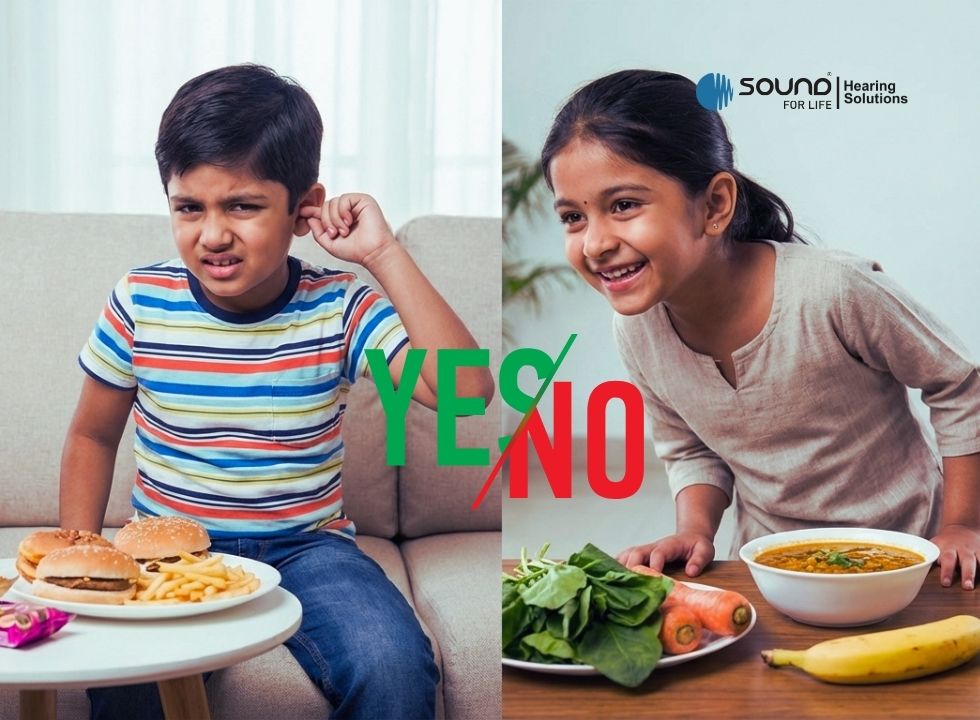

Introduction: The “Finish Your Vegetables” Battle
Every Indian household witnesses a daily battle at the dining table.
“Beta, eat your Dal.”
“Finish the Palak paneer, it’s good for your eyes!”
We have all grown up hearing that carrots are good for our eyes and milk is good for our bones. But have you ever heard a parent say, “Eat this banana, it’s good for your hearing”?
Probably not.
In India, we rarely associate diet with ear health. We tend to think of hearing as a mechanical sense, something that either works or doesn’t. We assume hearing loss is caused only by loud noises, aging, or genetics.
But here is the truth that experts at SFL Hearing Solutions want you to know: Your child’s ears are hungry organs.
The inner ear is a high-energy powerhouse. It operates all the time, turning sound waves into impulses for the brain. For this to happen, it needs a steady flow of blood, oxygen, and certain nutrients. If a youngster doesn’t eat enough, their hearing system might grow weak.
As processed “junk” food, sugary beverages, and less home-cooked meals become more popular in urban India, we are noticing a disturbing trend in the health of children’s ears.
This article will look at the surprising connection between what your child eats and what they hear. We will talk about the important nutrients, the “enemy” foods, and provide Indian parents useful ideas on how to take care of their ears.
How Does Food Actually Affect the Ears?
To understand diet, we must understand the anatomy briefly.
Inside your child’s ear is a tiny, snail-shaped organ called the cochlea. It contains thousands of microscopic hair cells. These cells are responsible for sending sound to the brain.
Here is the catch: These hair cells do not regenerate. Once they die, they are gone forever.
So, how does food help?
- Blood Flow: The arteries supplying the inner ear are very thin. A diet high in bad fats can clog these arteries (just like in the heart), cutting off oxygen to the ear.
- Protection: Loud noises (school buses, Diwali crackers, headphones) create “free radicals” that damage ear cells. Antioxidants found in food act as a shield against this damage.
- Fluid Balance: The inner ear contains fluid that needs a precise chemical balance of potassium and sodium to function. If this balance is off, hearing suffers.
The “Super Nutrients” for Indian Kids’ Ears
You don’t need expensive supplements. The Indian kitchen is a pharmacy in itself. Here are the top nutrients your child needs and where to find them in a typical Indian diet.
1. Potassium: The Fluid Regulator
As we get older, our potassium levels drop, which is linked to age-related hearing loss. But for children, potassium is vital for regulating the fluid in the inner ear.
Indian Sources:
- Bananas: The easiest snack for a tiffin box.
- Potatoes: Aloo-Gobhi or mashed potatoes (boiled, not fried!).
- Palak Paneer or Palak Dal are two dishes that include spinach.
- Oranges are good for your immune system and ears in the winter.
2. Folate (Folic Acid): The Circulation Booster
Research indicates that folic acid aids in the metabolism of homocysteine, an amino acid that may diminish blood flow to the body. Healthy ears come from good blood flow.
Indian Sources:
- Lentils (Dal): The staple of every Indian meal. Moong, Masoor, and Toor dal are excellent sources.
- Chickpeas (Chole): A kid favorite.
- Broccoli and Asparagus: Though more western, they are available in Indian markets now.
3. Magnesium: The Noise Shield
This is a superpower nutrient. Magnesium has been shown to protect the ears from noise-induced hearing loss. It acts as a barrier against the free radicals released during loud noise exposure. If your child plays video games or lives in a noisy city like Delhi or Mumbai, they need magnesium.
Indian Sources:
- Almonds (Badam): Soaked almonds in the morning are a great tradition.
- Bananas: Again, a superfood!
- Brown Rice: Switch from white to brown occasionally.
- Curd (Dahi): A bowl of yogurt with lunch.
4. Zinc: The Immunity Warrior
Children are prone to ear infections (Otitis Media). Zinc boosts the immune system, helping the body fight off the bacteria and viruses that cause these painful infections.
Indian Sources:
- Cashews (Kaju): A handful as a snack.
- Dark Chocolate: Yes, a treat can be healthy!
- Split Peas and Lentils.
- Non-Veg Options: Mutton and chicken.
5. Omega-3 Fatty Acids: The Anti-Aging Agent
Omega-3 helps prevent inflammation in the blood vessels of the ear.
Indian Sources:
- Fish: Rohu, Hilsa, or Pomfret (curries are better than fried).
- Walnuts (Akhrot): The shape of a walnut looks like a brain, and it helps the brain-ear connection!
- Flaxseeds (Alsi): You can roast these and add them to salads or chutneys.
The “Enemy” Foods (What to Avoid)
Just as some foods heal, others harm. In modern India, the “School Canteen” and “Birthday Party” culture is introducing foods that are detrimental to ear health.
1. High Sodium (Salt)
Salt retains water. In the body, this leads to bloating. In the ear, it leads to fluid retention in the cochlea, which can cause pressure, tinnitus (ringing), and temporary hearing loss.
- The Culprits: Packaged chips, pickles (Achar – eat in moderation!), papad, instant noodles (Maggi), and sauces.
2. High Sugar and Refined Carbs (Maida)
High blood sugar levels can damage the nerves and blood vessels in the ear. With India being the “Diabetes Capital of the World,” we are seeing pre-diabetic conditions in children affecting their hearing.
- The Culprits: Samosas, white bread, pastries, colas, and excessive festive sweets (Mithai).
3. Saturated Fats
Bad fats restrict blood flow. If the heart has trouble pumping blood through clogged arteries, the tiny capillaries in the ear are the first to suffer.
- The Culprits: Vanaspati ghee, excessively fried street food (Bhature, Pakoras).
When Diet Isn’t Enough – Signs You Need an Audiologist
While a good diet is a shield, it is not a cure-all. If your child has a genetic predisposition or has already suffered damage, carrots and almonds won’t reverse it.
You need to search for a “hearing aid centre near me” or an audiologist in India if you notice these signs, regardless of how healthy their diet is:
- Speech Delay: Is your child speaking later than their peers?
- Volume Issues: Do they turn the TV volume up to levels that are uncomfortable for others?
- “What?” Syndrome: Do they constantly ask you to repeat yourself?
- Poor Grades: Are they struggling in school, specifically with dictation?
- Ear Pain: Frequent complaints of earaches could mean chronic infections.
At SFL Hearing Solutions, we believe in a holistic approach. We check the hearing and we discuss lifestyle. A hearing test is the only scientific way to know the truth.
Why the “Wait and See” Approach Fails
Many Indian parents believe, “He is just a little inattentive, he will grow out of it.”
Experts advise against this. The auditory nerve needs stimulation. If a child has mild hearing loss (due to nutrition or other causes) and it is left untreated, the brain stops recognizing certain sounds. This is called Auditory Deprivation.
Even with the best diet, if the structure of the ear is damaged, your child may need support. Modern solutions are not big and bulky.
- Hearing Aids: Today’s devices are invisible and smart.
- Therapy: Sometimes, auditory training is all that is needed.
Essential Ear Care Tips for Modern Indian Kids
Apart from food, teach your children these habits:
- Hydration: Water is essential for maintaining blood volume and flow to the inner ear.
- Exercise: Cardio exercise (running, playing football, cricket) pumps oxygenated blood to the ears.
- Manage Stress: Yes, kids get stressed too (exams, tuition). Stress releases cortisol, which affects blood circulation.
- No Earbuds for long hours: Limit headphone usage to 60 minutes a day at 60% volume.
Frequently Asked Questions (FAQs)
Question 1: Can a lack of vitamins make you lose your hearing?
Answer: Yes, not getting enough of some vitamins and minerals can harm your hearing over time. Severe shortages of vitamin B12, vitamin D, or iron, for example, are linked with hearing problems and with tinnitus (a ringing or buzzing in the ears). These deficiencies usually don’t cause sudden, complete deafness, but they can damage the nerves and tissues in the ear or reduce blood flow and oxygen to the inner ear, making hearing worse and slowing recovery from other ear injuries.
If you have unexplained hearing changes, ringing in your ears, or feel less able to hear in noisy places, it’s a good idea to check with a doctor. A simple blood test can show if you’re low in B12, D, or iron. Treating a real deficiency through diet changes, fortified foods, or supplements your doctor prescribes often helps protect your hearing and can improve symptoms. Don’t start supplements on your own without medical advice, because the right dose and treatment depend on your specific test results and health needs.
Question 2: My child loves chips. Will he go deaf?
Answer: Eating chips occasionally won’t make him deaf. However, a daily habit of high-sodium foods causes fluid retention in the ear, which can lead to Ménière’s disease-like symptoms or aggravate existing hearing issues. Moderation is important.
Question 3: Is there an Indian plant that can help with hearing?
Answer: Ayurveda suggests certain medicines that might indirectly assist ear health, such as Ginkgo Biloba (for circulation) or Ashwagandha (for stress). But in India, you should never put oil or herbal drops in your ear canal without first talking to an ENT or audiologist. It can lead to fungal infections.
Question 4: How often should I get my child’s hearing checked?
Answer: A test every two years during school years is OK if there are no problems. An yearly hearing test is a good idea for those who have had ear infections in the past.
Question 5: Are supplements necessary for kids?
Answer: Usually, a balanced Indian diet (Dal, Roti, Sabzi, Milk, Fruits) provides enough nutrients. Supplements should only be given if a pediatrician diagnoses a deficiency. Real food is always better than pills.
Question 6: Does milk help with hearing?
Answer: Yes! Milk is rich in Vitamin D and Calcium, which are essential for the tiny bones in the middle ear (the ossicles). Weak bones can lead to conductive hearing loss.
Feed the Body, Protect the Sense
As parents, we spend hours worrying about our children’s grades, their height, and their eyesight. It is time we added “Hearing Health” to that list.
The ears are the gateway to communication, education, and social connection. A simple shift in diet, adding a few walnuts, reducing the packet of chips, and ensuring they finish their greens, can make a massive difference in preserving their hearing for life.
However, remember that food is prevention, not a magic cure. If you suspect your child is struggling to hear, do not rely on almonds alone.
Get the facts. Get a test.
At SFL Hearing Solutions, we are dedicated to the hearing health of the next generation. Whether you need a dietary consultation for ear health or a comprehensive pediatric hearing assessment, we are here to help.
Let’s ensure their future sounds as bright as it looks.
Call: +91 90 1540 1540
Disclaimer:
This information is just for educational and informational reasons. It is not medical advice and should not be used to diagnose or treat any health problem. Changes to your diet can’t take the place of competent medical treatment. If you’re worried about your child’s health or nutrition, always ask a competent doctor, paediatrician, or professional audiologist for help with any issues you have about your child’s health or nutritional needs. They can tell you which tests and therapies are best for your kid. Before you give your child vitamins or make big changes to their diet, you should always talk to a doctor or nurse.